Physiotherapists are essential in Primary Care Teams
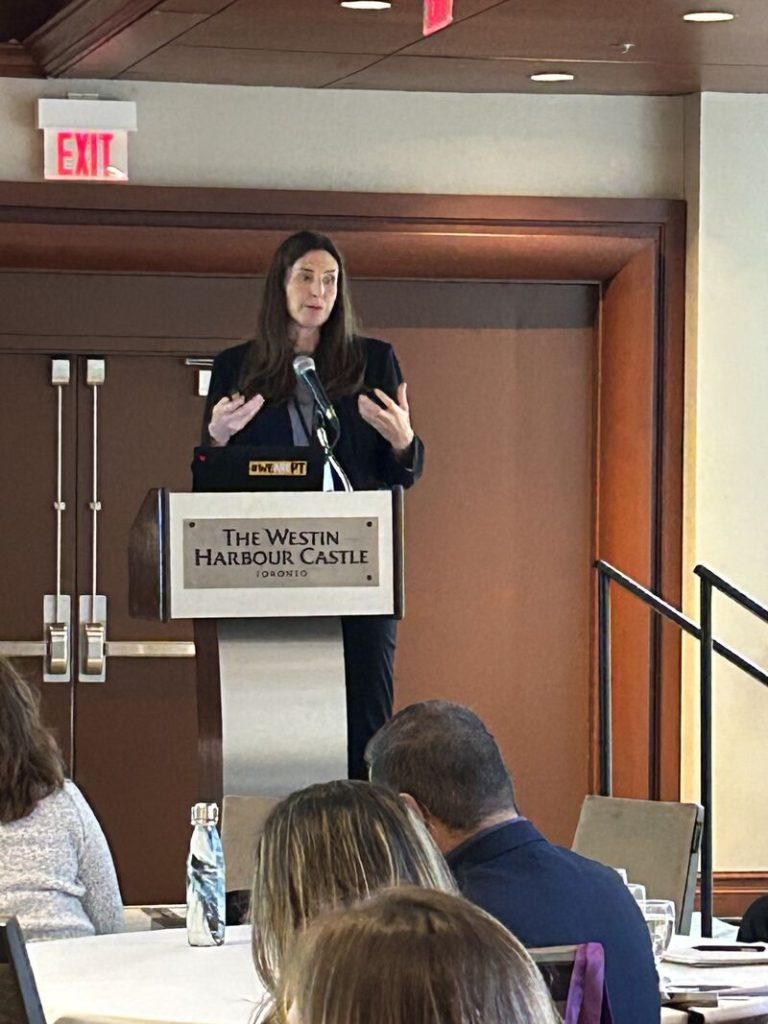
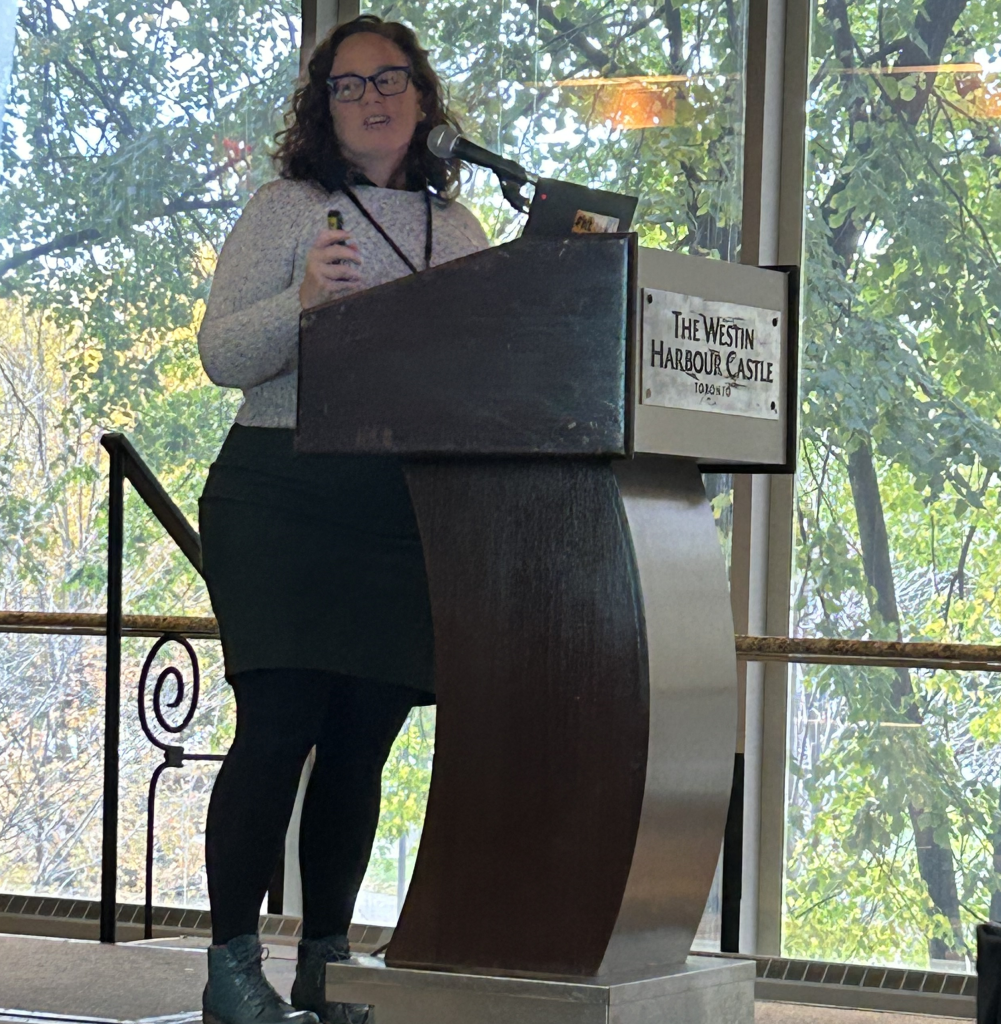
OPA continues to advocate for increasing the integration of physiotherapists into primary care teams. Emily Stevenson, OPA’s Director of Practice & Policy and Amy Hondronicols, former OPA Director, presented at the Association of Family Health Teams of Ontario conference, Power of Primary Care 2025, on October 23. Emily and Amy shared the evidence for physiotherapists in team-based primary care – resulting in the right care, at the right time, by the right provider.
Emily StevensonAmy Hondronicols
The Evidence Shows:
Faster access to the right care
Less diagnostic imaging ordered
Fewer referrals to specialists (orthopedics and rheumatology)
Less sick leave
Fewer prescriptions for pharmaceuticals
Higher patient satisfaction
Low rate of follow up with Family Physician or Nurse Practitioner (<1% in the UK)
From L to R: Amy Hondronicols, Courtney Bean, Emily Stevenson, Hon. George Smitherman, Sarah Hutchison
Emily and Amy were joined by OPA’s President, Courtney Bean, and Sarah Hutchison, OPA’s CEO.
Helping Ontario reach 100% Attachment
There are currently about 90 physiotherapist positions in primary care teams in Ontario, including Family Health Teams, Community Health Centres, Nurse Practitioner-Led Clinics, and Indigenous Primary Care Teams. With Ontario’s Primary Care Action Plan to create or expand 305 teams, there is great opportunity to increase the presence of physiotherapists to support Ontario’s goal of 100% attachment to primary care.
First Contact Physiotherapy in Primary Care Teams
The evidence is there – first contact physiotherapy improves patient outcomes, family physician/nurse practitioner satisfaction and reduces red tape within the health system.
Physiotherapists are the experts in the assessment, diagnosis for all MSK concerns. With 20-30% of all visits to primary care in Ontario being musculoskeletal (MSK) concerns, physiotherapists can be the first contact, and offload visits from the family physician or nurse practitioner. It is estimated that an additional 425 patients could be attached per physiotherapist.
The Family Physician/Nurse Practitioner Perspective
88% of family physicians and nurse practitioners reported that working with a physiotherapist increased their own satisfaction in providing care. 94% reported that having a physiotherapist in the team resulted in more comprehensive care for the patients. (Toronto Community Health Centre Evaluation, 2016).
Resource for Physiotherapists in Primary Care Teams
In their presentation, Emily and Amy also shared about the development of the PT in Primary Care Competencies and Educational Modules – an initiative in partnership with Team Primary Care (Projects — Team Primary Care | Équipe de Soins Primaires). This project was led by Dr. Jordan Miller and supported by the Canadian Physiotherapy Association. It included contributions from various physiotherapy professionals across Canada.
The education modules are designed to support physiotherapists to successfully integrate into interprofessional teams in primary care. The modules are also helpful to educate interprofessional team members and team leadership/ executives – so feel free to share broadly with anyone in your local community/network!
Physiotherapy in Primary Care Teams – Improving Health Outcomes
The evidence shows that adding physiotherapists to primary care teams improves patient, provider, and system outcome in Ontario. The more we can demonstrate our value across all practice settings, the more we are able to advocate for increasing access so that everyone in Ontario has a physiotherapist across their lifespan.
“I feel encouraged about our profession and am more motivated to get back at it!” – feedback from one Physio North conference attendee
Northern Ontario District members welcomed the physiotherapy community to their district’s bi-annual conference in Timmins.
The event took place over two days, from October 3-4, and included many amazing sessions, a pre-conference course, and a chance to network with the Northern and Northwestern Ontario physiotherapy community, among others.
What a few attendees had to say about the event:
“It was truly a valuable experience for both skill development and networking opportunities. It was great connecting with so many engaged professionals.”
“Amazing coming together of the North.”
When asked what they liked most about the event, attendees shared:
“Networking with colleagues, meeting/interacting with the CEOs of the CPO and OPA”
“Networking with peers and sharing what is important to Northeastern Ontario Physiotherapists with OPA and the College”
Craig Roxborough, Registrar & CEO and Mary-Catherine Fraser Saxena, Manager, Practice Advice (CPO) both echoed there were lots of meaningful conversations, and they appreciated the opportunity to connect with PTs in the North to hear their perspectives.
Courtney Bean, OPA’s President, said he had such a great time and it really filled his bucket. He said he has some good understanding of the challenges of rural care but now realizes the amazing passion of people providing care in rural locations. He also learned a lot about care in the North…a lot more than he ever knew.
Sarah Hutchison, OPA’s CEO, gained a deeper appreciation of the challenges that rural and remote physiotherapists face and how the OPA might advocate further. She also observed that the sense of community was incredible and contagious!
From L to R: Jack Miller, PT & Pre-conference Course Instructor, Courtney Bean, PT and OPA President & Sarah Hutchison, OPA CEO
Get Involved Locally
Physio North 2025 is one example of the amazing work done by district volunteers. Thank you to Rhonda Matthews, Northern Ontario District President, and Jody Lemieux, Secretary, for making this event happen!
Regional representation at OPA through our 16 districts is invaluable. While districts may share similarities, understanding the unique populations and advocacy needs in each district contributes to OPA’s success. We encourage all members to get involved in their districts.
OPA Presents at Health Workforce Canada Connects Conference
Emily Stevenson, Director of Practice and Policy at OPA, spoke at the Health Workforce Canada Connects conference about the value physiotherapists bring to primary care teams. CPA CEO Krissy (Murphy) Bell moderated the workshop “From Silos to Synergy: Scalable, Sustainable Solutions for Team-Based Primary Care”. The session brought together an exceptional panel of leaders from across a diverse spectrum of professions, perspectives, and places in Canada to explore scalable and sustainable models for team-based primary care.
Physiotherapy Access in Primary Care Matters
Emily Stevenson highlighted how critical it is that PTs are incorporated into health human resource planning as they are essential members of team-based primary care. Physiotherapists, when incorporated, increase access and attachment to primary care, as they can assess, diagnosis and treat conditions in their scope, which increases the capacity of family physicians and other team members. Physiotherapists need to be part of every primary care team to provide the right care, at the right time, by the right person.
Roles for PTs in Primary Care
We know that PTs in primary care:
improve access to health services
work collaboratively with other providers to build more capacity in primary care teams
reduce emergency department visits
lead to better outcomes for patients
and enhance continuity of care for patients.
In 2015, OPA was one of the strong advocates leading to the addition of PTs to Family Health Teams in Ontario.
Visit OPA’s Primary Care Hub to stay up to date on all things primary care.
Presenting at national interprofessional conferences allows OPA to demonstrate the value we bring to patients and health system partners. It provides us an opportunity to connect to other health care professionals, building relationships for increased collaboration and advocacy. Thank you to CPA’s CEO, Krissy Bell, for inviting OPA to participate in this important panel discussion.
What is Health Workforce Canada?
Health Workforce Canada is a new, independent organization established by an Interim Steering Committee, supported by the Canadian Institute for Health Information (CIHI), and funded by Health Canada. It has been created in recognition of the need to bring together health workforce experts and those in the health care field to learn from each other and strengthen health workforce data and planning to help ensure health workers are there to provide the care people in Canada need.
Thank you to the Health Workforce Canada | Effectif de la santé Canada team for bringing together such an engaged community of health systems leaders and workforce planners, and for continuing to create space for collaboration and innovation.
Following our September update about the Government of Ontario’s public consultation on scope of practice changes, OPA has completed our comprehensive response to the Ministry of Health.
The consultation period closes on November 3, 2025, and we strongly encourage all physiotherapists to participate and make their voices heard. See below for how.
OPA’s Submission: Ready for Your Use
OPA has submitted a detailed response addressing all consultation questions, backed by evidence, research, and the results of our 2024 survey of Ontario physiotherapists. Members are welcome to reference, adapt, or use content from our submission in their own responses to the government consultation.
Our submission emphasizes how implementing the authority for physiotherapists to order diagnostic imaging (X-rays, CT scans, MRIs, and diagnostic ultrasounds) will:
Improve Access to Care
Reduce Healthcare System Burden
Work Within Established Quality & Safety Frameworks
Our submission includes compelling data from the 2024 OPA survey of Ontario physiotherapists who responded that:
74% experience difficulties obtaining diagnostic imaging or lab results needed for patient care
84% report that these challenges lead to delayed treatment for patients
82% have completed tests but never received the reports
62% have seen inaccurate diagnoses result from these barriers
Research from jurisdictions where physiotherapists already have this authority demonstrates:
No significant increase in overall imaging utilization
High concordance between physiotherapist and specialist physician ordering patterns
27-49% reduction in healthcare costs (systematic review)
Most Alberta physiotherapists order an average of only 22 imaging tests per year
Outstanding Authority: Laboratory Tests
This consultation focuses on diagnostic imaging. OPA will continue to advocate for the authority to order laboratory tests- the final piece of scope expansion approved under Bill 179 in 2009 that has not yet been implemented.
Three Ways to Participate Before November 3
Your voice matters. Here’s how you can support this critical scope expansion:
Use OPA’s submission: Reference or adapt content from our comprehensive response.
Submit directly to the government consultation: Visit the Ontario Regulatory Registry to provide your feedback.
Since 2009, physiotherapists have been waiting for the regulations needed to implement scope of practice changes that are already approved in legislation. Four other provinces- Alberta, Quebec, Nova Scotia, and PEI- have successfully implemented this authority for physiotherapists.
With Ontario facing:
Challenges for patients across Ontario to access care
2.5 million people without a family physician (projected to reach 4.4 million by 2026)
Increasing wait times for specialist consultations
Emergency departments overwhelmed with non-urgent visits
Implementation of these scope changes will allow physiotherapists to better serve patients, reduce system pressures, and deliver on the government’s commitment to provide “the right care in the right place.”
Timeline Reminder
Consultation closes: November 3, 2025
What happens next: Following the consultation, the Minister of Health will need to make regulation amendments (subject to Cabinet approval).
OPA remains optimistic that the government will move quickly with the needed regulation changes following this consultation period.
The recent announcement by the Government of Ontario about pending scope of practice implementation for physiotherapists in Ontario is an important and welcome step. OPA remains optimistic that following the completion of the Government consultation on November 3, 2025, the Government will move quickly with the needed regulation changes to expand the scope of practice for physiotherapists.
OPA also continues to advocate for the remaining needed changes so that physiotherapists can order laboratory tests, which the announcement did not reference.
Member Meets with Premier Doug Ford & Minister of Health Sylvia Jones
Anthony Grande, PT and OPA member, met with Premier Doug Ford on September 25 and Deputy Premier and Minister of Health, Sylvia Jones on October 7, 2025.
OPA provided Anthony with a letter of acknowledgement and appreciation for the Premier and Minister of Health on behalf of 12,000 physiotherapists in Ontario for their leadership in announcing plans to implement the needed changes. Anthony thanked both the Premier and Deputy Premier in person for the recent Government of Ontario announcement regarding plans to implement the needed changes for physiotherapists to be able to order diagnostic imaging.
We thank all members who recently submitted feedback to OPA regarding the Government consultation. OPA is also encouraged by all members, like Anthony, who dedicate time and energy to advocating for the the physiotherapy profession, and the implementation of our full scope of practice.
Continued Advocacy is Needed
The Government of Ontario consultation on the proposed changes to scope of practice closes on November 3, 2025. OPA will share our submission with members prior to the government’s consultation closing.
Highlighting the Full Scope of Physiotherapy Practice with Andrew Tri, Emergency Department Physiotherapist
In the ever-evolving landscape of Ontario’s healthcare system, physiotherapists are stepping into new roles and settings with significant impact. Andrew Tri, a physiotherapist working in the emergency department at Toronto General Hospital, shares his journey, insights, and hopes for the future of the profession.
A Dynamic Career Path
From his early days working in private neurological rehabilitation and high-performance sport clinics, to supporting elite athletes at the Toronto Lakeshore Skating School and national teams such as Swimming Canada, Skate Canada, and Rowing Canada, Andrew Tri’s career has always been dynamic. Diverse education and a shifting healthcare landscape allowed him to move between roles in inpatient surgical units, sports organizations, and even a health tech company, which eventually led him to become a trailblazer in the emergency department.
“My path has always included both public and private settings,” Andrew explains. “That hybrid approach kept my skills sharp and my perspective broad.”
After earning his FCAMPT (Fellow of the Canadian Academy of Manipulative Physiotherapy) designation in 2018, Andrew pursued further education through the Master of Clinical Science in Advanced Health Care Practice (Sport and Exercise Medicine) at Western University (AHCP-SEM). This interdisciplinary program was a steppingstone to a new opportunity to work at Trillium Health Partners – Credit Valley Hospital, which eventually led Andrew to University Health Network, where he is helping define and expand the role of physiotherapists in the emergency department.
Emergency Care
Andrew credits his wealth of postgraduate training and wide-ranging clinical experience for preparing him for the unpredictable nature of the emergency department. “The emergency department is one of the most unpredictable areas of the hospital” Andrew explains. “The AHCP – SEM program at Western is designed so that you’re in a mixed cohort of PTs and Physicians…I had the privilege of learning from some brilliant physicians, some of whom practice in the emergency department.”
In the emergency department at Trillium Health Partners – Credit Valley Hospital, Andrew worked under medical directives that allowed qualified physiotherapists to order imaging, administer analgesia, and manually reduce dislocated joints:
“If a shoulder dislocation comes into the emergency department, we are the first ones to assess, order imaging, and initiate the reduction process.”
This proactive, team-based approach helps streamline emergency operations and improves patient outcomes. Andrew has noticed that this model “allows individuals to receive appropriate care in a time-effective model that better utilizes resources and distributes work amongst team members.”
Physiotherapists as System Changers
Andrew is part of a small but growing group of physiotherapists working to their full scope of practice in collaborative teams. “Having the experience of working in a role that allows for basic medical imaging and administering analgesia allows me to experience first-hand what a full scope of practice in Ontario could look like,” Andrew says.
Andrew believes that high-quality roles where physiotherapists practice to full scope are powerful advocacy tools: “I believe doing the role, and doing it well, helps push the boundaries as we continue to serve as a strong representation of what PTs can do, or look to do once trained to do so.”
Over time, Andrew has seen growing awareness of the value that physiotherapists bring to the emergency department: “There is a lot more understanding of what PTs can do and the value that can be provided in the emergency department.” From assessment and early management to discharge planning and education, physiotherapists play an integral role in improving patient care.
Serving Underserved Populations
Musculoskeletal conditions, which are frequently underserved in traditional emergency department models, are an area where PTs shine.
“These musculoskeletal populations are in our wheelhouse as PTs,” says Andrew. “Our impact is in providing early, effective education and starting someone’s journey on a higher trajectory…This reduces the likelihood of those fear avoidant behaviours and maladaptive patterns.”
He also highlights the PT’s role in managing chronic conditions and geriatric syndromes, both of which are areas where timely intervention can prevent unnecessary hospitalizations and future emergency department visits.
In a system battling hallway medicine and capacity issues, Andrew believes physiotherapists are key allies. “We’re constantly assessing and developing management and discharge plans to ensure those who are in need of active emergency medicine, have the space to receive the appropriate care…”.
Advocacy, Collaboration, and Moving Forward
Andrew believes that adding more physiotherapist roles in emergency departments is not only possible but essential: “We are trained to provide value beyond mobility and discharge planning, [and] we are well-positioned to contribute more to assessment and management”.
For fellow health professionals, he emphasizes the need for collaboration:
“PTs can provide a lot of value to a healthcare system that is currently overloaded and understaffed. The deterioration that typically happens in the care areas of musculoskeletal, cardiorespiratory, neurological, and complex care systems often end up presenting to the emergency department in the form of falls, physical fragility, loss of function and independence, and generally failure to thrive.”
As the healthcare system evolves, Andrew outlines a roadmap for progress: use data to demonstrate impact, build public and political awareness, advocate for new physiotherapist roles, and form task forces to address broader healthcare trends.
He also urges physiotherapists to challenge the status quo and continue to grow: “We are in a profession of continued, life-long learning [and] times have changed. The stresses and demands on the health care system have changed. We must continue to advocate for the appropriate change in our scope of practice to better serve and support these new demands.”
A Vision for Physiotherapists in Emergency Care
Andrew’s story is a case study of the untapped potential of physiotherapists within Ontario’s healthcare system. His work exemplifies how the profession, when supported to work to full scope, can transform emergency care and support system-wide goals.
As Ontario’s healthcare landscape continues to shift, stories like Andrew’s are a powerful reminder of what is possible when physiotherapists are empowered to lead, innovate, and care at the highest level.
Are You our Next Member Spotlight?
Do you want to be featured and in an innovative role? Spoken about physiotherapy in a podcast or the news? Published an article? Or represented the physiotherapy profession through advocacy?
We want to celebrate you as a physiotherapist, PT or PTA student or PTA!