skip to content

Advocating for Greater Sustainability in the CPC Program

About the Community Physiotherapy Clinic (CPC) Program  

The CPC Program provides access to vital physiotherapy services throughout Ontario. Launched in 2013, the CPC Program has provided almost 10 million treatments. It successfully complements diverse primary care, home care, integration, and care-continuity government priorities.  

Certain criteria apply for those who can seek treatment at a CPC. This includes seniors (65 and over), youth (under 19), people who have had an overnight hospital stay, or an outpatient/day surgery procedure and recipients of ODSP. 

The CPC Program runs out of both hospital and community clinics across Ontario. Providers hold a Transfer Payment Agreement (TPA) with the Ministry of Health (MoH). The TPA is expected to be renewed in April 2026.  

Program providers are allocated a certain number of Episodes of Care (EOCs) each year. The current EOC payment amount is $334.38  

CPC Working Group Launched 

OPA struck a CPC Working Group in 2025 to help prepare for the forthcoming Transfer Payment Agreement (TPA) renewal in April 2026. The TPA is a binding contract between the Ministry of Health and an external recipient such as a license holder of a Community Physiotherapy Clinic to fund public services. The TPA determines the conditions under which providers are compensated by the Government of Ontario. 

What Are the Issues 

Over successive consultations, OPA members have raised concerns about the CPC Program and its sustainability. Program participants, especially those based in the community, speak to growing challenges in the Program’s delivery and broader misunderstandings among system stakeholders. 

Challenges include low compensation, too few EOCs to meet population needs, lack of transparency about the program’s allocation of EOCs and misunderstanding of the program’s goals among stakeholders. 

CPC Program Users and EOCs 

Seniors are the most frequent users of the Community Physiotherapy Clinic program. More than 80% of EOCs are utilized by individuals 65 and older. 

Investments in EOCs, which promote early upstream access to care in the community, mean a decreased need for much more expensive institutional care. OPA is advocating for an increase in the number of EOCs to effectively address the growing health needs of seniors in Ontario. See the chart below. 

yearsenior populationeoc volume
2013 ~ 2,000,000 125,000   
2025 ~ 2,940,000  + 940,000 (+ 47 %) 142,000  17,000 (~ +14%) 
2028 ~ 3,600,000  + 1,600,000 (+80%) (2013) + 660,000 (+23%) (2025) Proposed: 195,000  70,000 (+56% – 2013) 53,000 (+37% – 2025) 

CPC Survey Results 

OPA launched a survey in November 2025 directed to CPC Program TPA holders. The survey highlights four themes that emerged from the respondents: 

  1. EOC Compensation 
  1. EOC Volume 
  1. CPC Program allocation and service transparency 
  1. CPC Program awareness among system stakeholders 

Recommendations to the Ministry of Health (MoH) 

OPA completed additional research which supported survey respondents’ concerns and interests. Survey results were discussed with the MoH in December 2025. In January 2026, a meeting summary was sent to the MoH with the following recommendations:  

  1. EOC Payment: Increasing the rate from $334.38 to a range between $487.50 to $617.50 based on an average of 6.5 treatment sessions per EOC.  
  1. EOC Volume: Increasing the total volume of EOCs to 195,000 per year from 142,000 per year.  
  1. Improving CPC Program Activity Communication: Developing a report on EOC allocation and utilization, diagnostic codes, and Patient Reported Outcome Measures (PROM) data.  
  1. Improving CPC Program Awareness among Stakeholders: Co-developing a visual aide for system stakeholders to clarify the CPC Program’s purpose, use, and criteria.  

Among these four recommendations, EOC payment increases are the most critical part of the TPA. Increasing EOC volume alone requires clinics to provide more units of care that must be subsidized by other programs, such as WSIB or private insurance. 

Recent Meeting with the MoH 

OPA met with the MoH and CPC survey respondents on February 11, 2026, to share survey results and explore concerns raised by CPC providers. The MoH appreciated the program feedback and survey results and has committed to providing bi-weekly feedback with the proposals OPA made.   

What’s Next 

OPA will continue to communicate with CPC Program providers and advocate with the Ministry of Health prior to the TPA renewal in April 2026.  

Pre-Budget Submission 2026

Young Asian female physiotherapist treating man's leg

What’s the Issue 

The Government of Ontario invites workers, organizations, businesses and communities to share what matters most to inform the 2026 Ontario budget.  

OPA submitted a response to the annual budget consultation. Our response illustrates how physiotherapists can contribute to building a ‘more competitive, resilient and self-reliant province”, part of the government’s plan to protect Ontario.

OPA’s 2026-27 Budget Priorities 

Our 2026-2027 pre-budget submission focusses on attainable, impactful investments that will support the government in achieving the goal to increase capacity in Ontario’s health care system. The priorities are: 

  1. Provide required resourcing of physiotherapy positions in primary care, home and community care, and long-term care to bring compensation in line with the hospital sector. 
  1. Strengthen the Community Physiotherapy Clinic program as a strategy to support primary care access and to support seniors living in the community.  
  1. Address the health human resource crisis and improve access to care by enabling physiotherapists in Ontario to practice to full scope of practice. 

Part of Our Continued Advocacy 

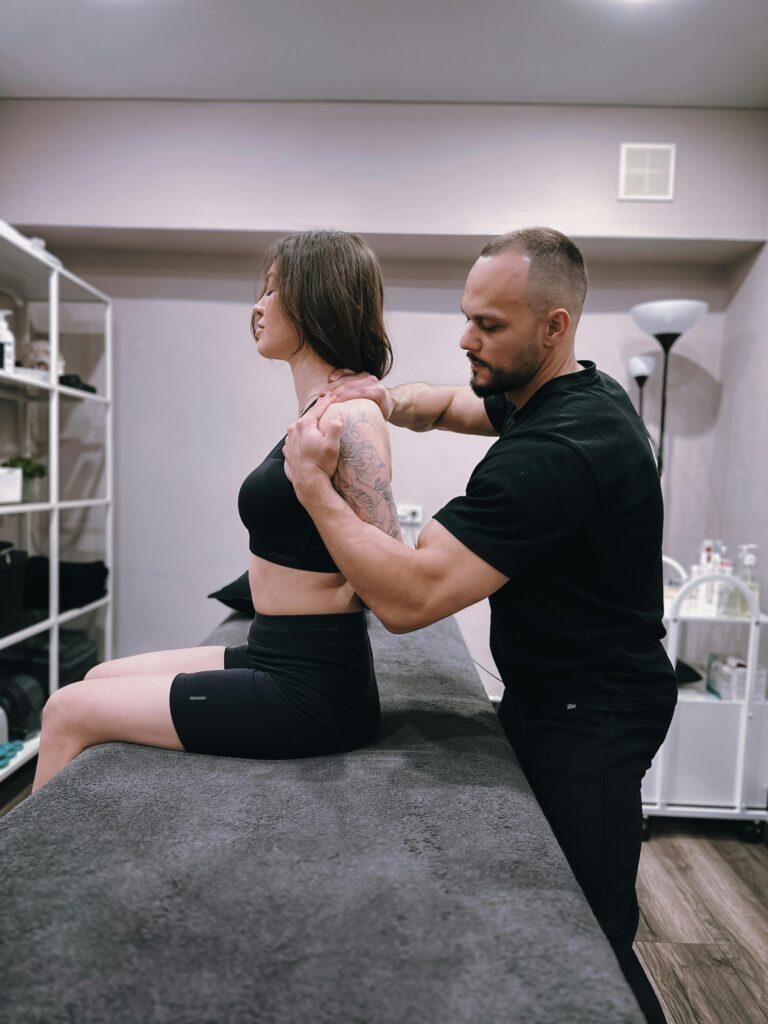
Male physiotherapist treating female client's upper body

The priorities outlined are informed by conversations, meetings, and surveys across various sectors throughout the year. OPA consults with members and health care leaders, including our advisory committees, Board of Directors and Districts. These conversations and information have been critical to identify the priorities of OPA’s 2026 Pre-Budget Submission. 

More About What OPA Wants on Behalf of PTs and Patients 

  1. PHYSIOTHERAPY COMPENSATION EQUALIZATION ACROSS PUBLIC SECTOR  

Physiotherapists have an essential role in delivering care in the community whether as part of a primary care team, at a patient’s place of residence, or in a long-term care facility. Access to care in each of these settings is critical to keeping Ontarians healthy, mobile and contributing to their communities and the economy. The challenge is that recruitment and retention in these positions is near impossible when the compensation is well below that of hospitals. To offset more costly institutional care, sufficient funding in the primary care, home care, and long-term care is essential to support health human resource needs long term. 

  1. STRENGTHENING THE COMMUNITY PHYSIOTHERAPY (CPC) PROGRAM  

The Community Physiotherapy Program (CPC) is a well-established program which has been providing access to essential physiotherapy care for over 10 years. This program partners with over 200 community clinics and outpatient hospital facilities to deliver physiotherapy services.  Unfortunately, continuation of the CPC program is becoming increasingly precarious, as the funding model has not kept pace with increasing operating costs. Episode of Care (EOC) funding has increased by only 7% since inception of the program; from $312 in 2013 to $334.38 in 2025.  Without access to this care, individuals are put at risk for chronic pain, limited function, and delayed return to work. This is not a risk we can afford. The bottom line is that insufficient government funding of the CPC program is creating a significant exposure of risk to Ontarians.   

  1. ENABLING PHYSIOTHERAPISTS’ SCOPE OF PRACTICE IMPLEMENTATION 

For physiotherapists, expanding scope to include diagnostic imaging and laboratory testing was included in changes to the Physiotherapy Act in 2009, as approved by the legislature. However, still today, the Ministry has not yet implemented the regulatory changes required to enact these changes.  

The result? Where once a leader, there are now four provinces who have surpassed Ontario with implementing scope changes, including Alberta, Quebec, PEI and Nova Scotia. Ontarians continue to deal with “circular referrals” where they must return to their family physician (or worse yet, the Emergency Department or Walk in Clinics) for referrals for diagnostic imaging, when it is already within scope of physiotherapists. 

As the government looks to attach two million people to primary care by 2029, expanding the scope of physiotherapists to include diagnostic imaging, will not only relieve the burden on family doctors – it will promote earlier diagnosis, earlier intervention, reduced system costs and promote better health outcomes. Expansion of scope will optimize any current and future investments in the community. The province cannot afford to wait any longer to enact this opportunity. 

About OPA’s Advocacy 

OPA’s advocacy work is ongoing, and our Pre-Budget Submission is one example of what we continue to do to advocate for our members.  

All Sectors are Affected 

Our recommendations affect the physiotherapy community in all practice areas. Whether it’s increasing compensation in primary care, home care, and long-term care, increasing funding for the Community Physiotherapy Clinic program, or enabling the implementation of physiotherapists’ full scope of practice, all members are impacted and would benefit from our suggested solutions. 

What’s Next 

We look forward to working with the government to implement these solutions. We will be looking for these commitments in this year’s budget, which is usually released in March.