skip to content

The Case for Publicly Funded Physiotherapists: From Emergency Departments to Community Physiotherapy Clinics

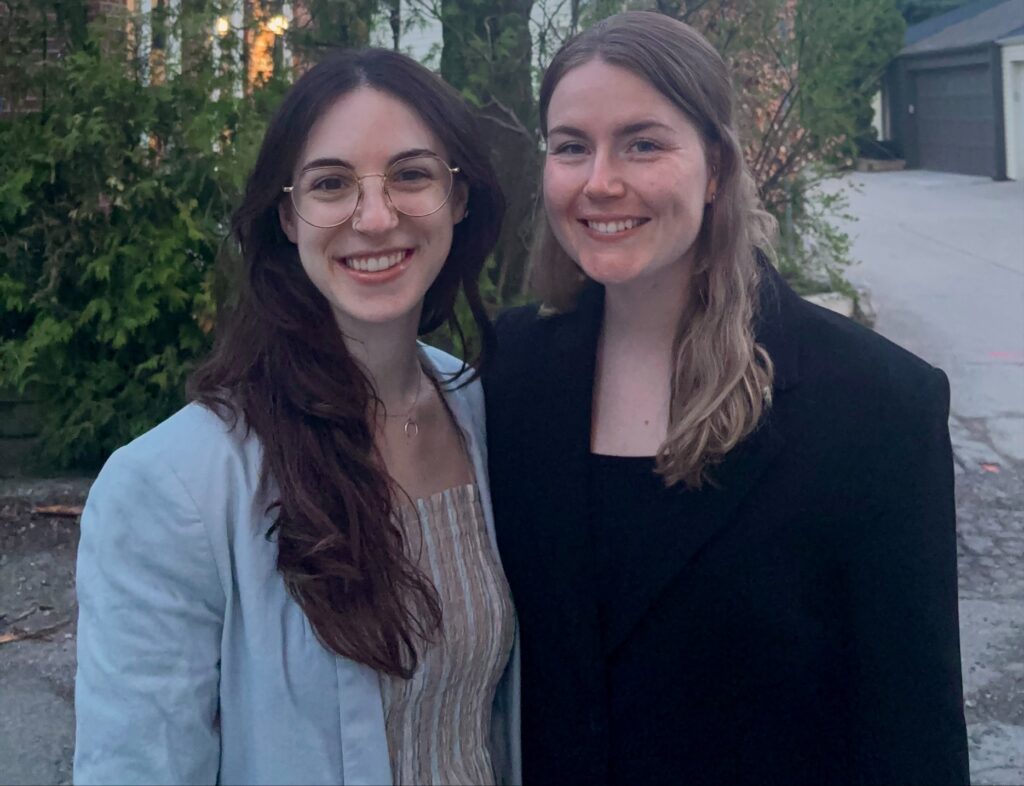
Makaila Koshurba, Physiotherapist with Riley Pedulla, Physiotherapist, work in Ontario Emergency Departments

Makaila Koshurba and Riley Pedulla are dedicated physiotherapists working in emergency departments (EDs) in Ontario. Their work is critical to reducing the burden on physicians in the Emergency Department, and their work also benefits patients who need physiotherapy.

Once assessed and treated, Makaila and Riley often refer patients to publicly funded physiotherapy clinics in the community, called Community Physiotherapy Clinics (CPCs), for follow-up care. Makaila and Riley see every day how critical it is to have publicly funded physiotherapists both in the ED and in the community.

“As physiotherapists (PTs) in the ED, we know from firsthand experience the benefits of Community Physiotherapy Clinics. Daily, we assess and treat patients who benefit significantly from physiotherapy follow-up in the community. These patients often cannot afford private physiotherapy services and are referred to a CPC when eligible. Funding stagnation of the CPC program puts a large population at risk of losing access to essential care.

CPCs prevent 70,000 ED visits annually and lack of support for the program risks increasing the burden on EDs as these patients return seeking answers to questions about their diagnosis, rehabilitation, and return to function.”

Despite a proven track record that Community Physiotherapy Clinics reduce strain on the healthcare system, the Ontario government recently notified CPCs that there will be no change to patient funding or program capacity over the next two years. CPCs are already underfunded and at capacity: this lack of investment is increasingly compromising access to care for those patients who need it the most. 

CPCs reduce visits to primary care, emergency departments (EDs), specialists, and prevent acute care admissions. This dearth of funding puts our patients and clinics at risk as service provision cannot keep up with patient needs. The CPC funding issue creates a large gap in the continuum of physiotherapy services from acute care to community-based care. 

Physiotherapists are Also Needed in Every Emergency Department 

There is a significant opportunity to ensure PTs are placed in all EDs across the province as well, and to utilize the PT scope of practice to the fullest extent. For many patients, especially those without private health insurance or access to publicly funded services, ED-based physiotherapy may be their only timely, affordable option for physiotherapy care. 

“In our experience, both patients and physicians have called the patient-centred, compassionate, and comprehensive approach that physiotherapists provide an essential part of healthy recovery.” 

Physiotherapists help patients feel more confident at discharge and help physicians by tackling cases that require more support than can usually be provided in busy EDs. Patients who see ED physiotherapists receive non-pharmacological pain management strategies, clarity about their prognosis and diagnosis, and activity modifications to help them return to the community. 

Increasingly, Ontario EDs have physiotherapists who assess and manage care for patients presenting with cardiorespiratory, neurological, and/or musculoskeletal (MSK) complaints. ED PTs see a variety of patients ranging from elderly people with hip fractures to young athletes worried about a concussion, and everything in between.  

Growing evidence supports the integration of physiotherapy in EDs highlighting significant benefits such as reduced wait times, improved patient satisfaction, and potential cost savings (Ocampo-Chan & Levy, 2025). However, not all Ontario EDs have physiotherapists, and not all physiotherapy care models in EDs are the same.

CPCs Essential for Preventing Emergency Visits and Future Injuries

A key part of the physiotherapist’s ED role is also to direct patients to the appropriate follow up care. However, without a reliable follow-up point of care like the CPCs, Makaila and Riley anticipate a higher rate of return to emergency departments for this patient population. The importance of CPC programming cannot be understated. Patients seen in the ED benefit from access to CPCs to continue their care, fully rehabilitate, and prevent future injuries. The budget silence on CPC is not just a physiotherapy issue; it negatively impacts the residents of Ontario, their local EDs, and ultimately burdens an already strained system. 

CPCs have been a staple in community care and continue to provide people in Ontario with essential services. Program funding should reflect the indispensable nature of the services provided. Furthermore, dedicated physiotherapists should also be available in every Ontario ED. 

Take Action Now 

We ask that our physiotherapy colleagues support OPA’s advocacy by signing the petition in response to the CPC funding crisis.  

We also ask that those working in an acute care setting consider whether their ED has dedicated physiotherapy coverage, and if not, to consider advocating for it. It is time that our staffing models, funding structures, and our government catch up to what the evidence and our patients have been telling us for years. 

Sign OPA’s Petition

OPA continues to advocate for the Government of Ontario to reconsider their decision to provide no increases to funding or capacity in the CPC program. Join our advocacy by signing our petition, write your local MPP or sign your name to our letter to Premier Doug Ford and Minister of Health Sylvia Jones. Contact OPA with any questions.

About Makaila and Riley

Makaila Koshurba and Riley Pedulla are Registered Physiotherapists working in urban EDs. They are passionate about healthcare quality, health equity, and health system transformation. The views expressed in this article are those of the authors alone and do not represent the positions of their employers or affiliated institutions.

Background on Discussion with Makaila and Riley

Courtney Bean, OPA President, Charlotte Anderson, OPA President Elect,  Sarah Hutchison, OPA CEO and Emily Stevenson, Director of Practice and Policy met with Makaila and Riley on their expanding role in emergency department triage and their need to ensure that there are community resources to re-direct eligible patients to for care. The discussion informed OPA’s interest in publishing this article.

References

1. Tepper, J., et al. (2016). (rep.). Under Pressure: Emergency Department Performance in Ontario. Retrieved April 22, 2026, from https://www.hqontario.ca/Portals/0/documents/system-performance/under-pressure-report-en.pdf.

2. Ocampo-Chan, S. A., & Levy, C. (2025). Rehabilitation in emergency departments: A regional scan and future opportunities. Healthcare management forum, 38(3), 263–272. https://doi.org/10.1177/08404704241292240


Member Spotlight: Elizabeth Benny’s Primary Care Journey

Elizabeth Benny, Physiotherapist and OPA Member Spotlight in primary care

Elizabeth Benny’s journey as a physiotherapist began in India, where she completed her Bachelor of Physiotherapy in 2007. She started her career in a quaternary care hospital, working for four years within a multidisciplinary rehabilitation team.

“This setting provided me a strong clinical foundation and exposure to complex inpatient and outpatient populations across orthopaedics, neurology, cardiopulmonary care, oncology, medical and cardiothoracic ICUs, neonatal and neurosurgical ICUs, and organ transplant services,” says Elizabeth.

She later joined a university hospital under the Bahrain Defence Force, where she helped develop an orthopaedic triage unit. Reflecting on this phase, Elizabeth explains that the role strengthened her clinical reasoning, assessment, and diagnostic skills and introduced her to an early model of first-contact physiotherapy.

After immigrating to Canada and completing the licensing process, Elizabeth began working at a Community Health Centre (CHC). At the time, she says she had only a limited understanding of what a CHC truly represented. “The transition from a fast-paced corporate healthcare system to one characterized by long waitlists and patients facing profound medical and social complexity was challenging” she says. “Yet the work felt deeply familiar, echoing my upbringing in a village in Kerala, India.”

Discovering Primary Care

At the CHC, Elizabeth encountered patients living with chronic pain complicated by psychosocial stressors, trauma, economic hardship, and marginalization. “I quickly realized that physiotherapy alone was insufficient; meaningful care required addressing the social determinants of health,” she says.

This realization shaped her professional direction and led her to pursue a Master’s Degree in Physiotherapy. Her research focused on chronic pain management and resulted in a peer-reviewed publication, Ontario Musculoskeletal Physiotherapists’ attitudes and beliefs about managing chronic low back pain (Physiotherapy Canada, 2020). Over the following decade, Elizabeth’s role expanded to more than hands-on treatment.

“My role expanded beyond clinical treatment to include conducting programs, patient education, self-management strategies, behaviour change, outcome measurement, referral coordination, interprofessional collaboration, and case management when needed,” she explains. “For me, the question shifted from why I came to primary care to why I stayed.”

For Elizabeth, working in a CHC is about purpose. “While I may not always eliminate pain, I can consistently offer support, continuity, and compassionate care, and that has proven deeply meaningful,” she says.

Physiotherapy in a Primary Care Setting

Elizabeth currently works full-time as a physiotherapist at CommunitiCare Health. She primarily sees adult patients with musculoskeletal conditions, many of whom live with chronic pain, and she is also trained in vestibular rehabilitation.

Elizabeth explains that primary care physiotherapy relies heavily on a biopsychosocial model. “Many patients have experienced significant adversity, including displacement from war-torn regions, interpersonal violence, discrimination, substance use challenges, or systemic inequities,” Elizabeth says. “These lived experiences profoundly influence pain, recovery, and function.”

She recalls a patient with persistent knee pain who did not improve despite appropriate rehabilitation. Further discussion revealed the patient was climbing eight flights of stairs multiple times a day because she feared using her building’s elevator due to Islamophobic abuse. With support from a social worker and police, the patient was able to safely use the elevator, fully participate in rehabilitation, and experience gradual pain reduction.

In another case, an elderly patient disclosed he slept in a chair because he did not own a bed. “A referral to a community health worker addressed this basic need, making rehabilitation possible,” Elizabeth explains. These experiences reinforce a central principle of primary care: “Pain and function cannot be separated from lived experience,” she says. “Physiotherapy extends beyond exercise prescription to advocacy, collaboration, and addressing root causes.”

Elizabeth works within a robust interprofessional team that includes physicians, nurse practitioners, occupational therapists, kinesiologists, psychotherapists, social workers, chiropodists, dietitians, and community health workers. Care is delivered through both individual appointments and group-based programs.

“This is only possible through cohesive teamwork,” she notes.

First-Contact Physiotherapy in Action

Elizabeth played a key role in implementing first-contact physiotherapy within her team. She explains that success depended heavily on interprofessional collaboration. “I advocated for direct access to allow all team members to book patients directly into my schedule and reduce a growing waitlist,” she says. This included the reception staff who were trained to book patients presenting with MSK issues directly into the physiotherapist’s schedule.

As the model developed, waitlists were gradually eliminated and administrative burden decreased, allowing more time for patient care. Elizabeth notes that benefits to this model included timely access to musculoskeletal care, reduced burden on family physicians, early identification of red flags, improved patient flow, and early activation to prevent falls and injury.

Challenges such as role ambiguity and managing complex presentations were addressed through clear communication, standardized documentation, and close collaboration with physicians.

Expanding Scope of Practice

Elizabeth’s role pushes beyond traditional perceptions of physiotherapy in Ontario: “My role extends beyond addressing physical impairments to actively considering psychosocial factors such as stress, emotions, beliefs, and social context,” she says. Functioning as a first-contact provider, triage clinician, case manager, and patient advocate is essential within a primary care framework,” she explains.

Impact on Underserved Populations

Chronic pain management has been the most impactful area of Elizabeth’s practice: “My approach is grounded in the biopsychosocial model and often begins with motivational interviewing, sometimes starting with something as simple as encouraging a patient to return to their favourite coffee shop,” she says. Elizabeth is particularly focused on developing expertise in chronic pain and vestibular rehabilitation for underserved populations.

“For many patients, even the cost of public transportation is a barrier to care, making private vestibular rehabilitation inaccessible,” Elizabeth explains. “Everyone deserves the right care.” She adds, “I deeply empathize with individuals living in constant fear of pain, dizziness, imbalance, and falls, all of which are conditions that significantly restrict participation and quality of life.”

Improving Access and System Efficiency

When Elizabeth joined her CHC, the physiotherapy waitlist was nearly two months long. Limited discharge capacity meant only a small number of initial assessments could be completed each month.

By pursuing additional education in chronic pain management and implementing group-based programs, the team transformed service delivery. As a result, patients were discharged sooner with improved outcome measures, assessment capacity increased, and the waitlist was reduced to under 48 hours. Twenty-four-hour urgent appointments were also introduced for post-surgical, post-fracture, and prenatal patients.

Through a first contact model, Elizabeth explains, patients were often seen by physiotherapists faster than by family physicians for musculoskeletal concerns. “Physiotherapists functioned as a triage service, escalating care when red flags were identified and initiating treatment when appropriate,” she says. This approach preserved physician capacity and contributed to reduced emergency department utilization.

Strengthening Attachment to Primary Care

Elizabeth describes the Community Health Centre as a patient’s healthcare home: “This model ensures that no patient in need is denied access to physiotherapy and strengthens attachment to primary care teams,” she explains.

Rather than focusing solely on a diagnosis, the team considers the full context of each patient’s life. “This is what a CHC represents,” she adds. “Healthcare delivered under one roof, with dignity, continuity, and compassion.”

Looking Ahead

Elizabeth believes that focused advocacy is required to expand primary care physiotherapy roles in Ontario: “Primary care physiotherapy is a niche that requires maturity, accountability, empathy, ongoing skill development, and strong ethical grounding,” she says.

Despite their impact, many roles remain vacant due to low remuneration and high turnover. Elizabeth emphasizes the need for appropriate compensation, recognition of advanced scope, sustainable funding models, and education about primary care physiotherapy.

Reflecting on lessons learned, she highlights the importance of leadership, strong networks, standardized practices, ongoing evaluation, and continuing education aligned with community needs. “Above all, a strong support system is critical,” Elizabeth says. “Managing complex care in primary care settings can be emotionally demanding, and having a trusted team for guidance and encouragement is indispensable.”

Are You our Next Member Spotlight?

Do you want to be featured? Are you in an innovative role? Spoken about physiotherapy in a podcast or the news? Published an article? Or represented the physiotherapy profession through advocacy?

We want to celebrate you as a physiotherapist, PT or PTA student or PTA!

NDP Calls Out Government of Ontario for Shortchanging Physiotherapy 

NDP Shadow Minister of Health MPP France Gélinas (Nickel Belt) released the following statement in response to the Minister of Health’s near frozen budget for the last 13 years, for community physiotherapy services. 

“Access to Physiotherapy is an important part of staying healthy after an injury or surgery. Patients get back to work sooner and rely less on pain killers during recovery. I agree with the Ontario Physiotherapy Association that the Ford government and Health Minister Sylvia Jones are not recognizing the value that physiotherapists add to our health care system.” 

Recent Announcement

The Ontario Physiotherapy Association sounded the alarm on April 15, 2026, regarding the Community Physiotherapy Clinic (CPC) Program lack of funding. The Government of Ontario recently notified CPC clinics that there is no increase in patient funding or program capacity for the next two years. Despite a proven track record of saving healthcare dollars, the program has been pushed to a breaking point due to chronic underfunding over the last 13 years.

About the CPC Program 

The CPC Program is a vital health service for patients who qualify, mostly seniors, and those who do not have private insurance. 

Investing in this program is one of the most cost-effective ways to support the provincial healthcare budget. The CPC Program currently delivers extraordinary value: 

  • System Savings: Every $1 invested in the CPC Program saves the government $4 in other healthcare costs.  
  • Emergency Prevention: The program prevents 70,000 emergency department visits annually.  
  • Reduced Strain: It reduces hospital admissions, diagnostic imaging costs, surgeries, and specialist consultations.  
  • A single emergency department visit costs $275. The CPC Program’s value is clear, but the government isn’t investing to match it. 

The Ontario Physiotherapy Association calls on the Ford government to think again and provide immediate, sustainable funding to ensure that seniors and vulnerable populations living in Ontario are not left behind.   

Ford Government Pushes Community Physiotherapy Clinic Program Into Funding Crisis

The Ontario Physiotherapy Association (OPA) is sounding the alarm as the Community Physiotherapy Clinic (CPC) Program faces a critical funding crisis that will hurt communities across Ontario. 

Despite a proven track record of saving healthcare dollars, the program has been pushed to a breaking point due to chronic underfunding over the last 13 years. Current Government funding is currently less than clinics’ costs of delivering the service. Regardless, the government recently notified clinics that there is no increase in patient funding or program capacity for the next two years. 

Many CPC clinics are small businesses that cannot sustain such continuing losses and will have to exit the Program. That will leave many communities without access to publicly-funded physiotherapy, after surgery, or injury. 

The CPC Program is a vital health service for patients who qualify, mostly seniors, and those who do not have private insurance. With seniors making up over 80% of the program’s patients, the lack of adequate funding puts thousands at risk.    

Sarah Hutchison, CEO of the Ontario Physiotherapy Association, stated: 

Despite a commitment to end hallway medicine and increase investments in primary care and home care, it appears that this government undervalues the Community Physiotherapy Program’s role in achieving both objectives. There is no increase in funding for physiotherapy clinics who deliver care and no response to the growth of wait lists and wait times for services. A mere $20 increase in funding over 13 years speaks for itself.”  

Reflecting on the government’s position, OPA President Courtney Bean stated: 

 “The news regarding the government’s lack of support for Community Physiotherapy Clinics (CPCs) is deeply troubling and inconsistent with what Ontario seniors and our health-system partners need in 2026. As our acute care system is under increasing strain, our health system needs better access to rehabilitation and the ability for people to stay independent in their homes and communities. Despite this, access to valuable care by physiotherapists through CPCs is being challenged. This lack of funding will erode access to already strained services for many seniors living in this province.” 

The Ontario Physiotherapy Association calls on the Ford government to think again and provide immediate, sustainable funding to ensure that seniors and vulnerable populations living in Ontario are not left behind. 

Background

An Undeniable Return on Investment

Investing in this program is one of the most cost-effective ways to support the provincial healthcare budget. The CPC Program currently delivers extraordinary value: 

  • System Savings: Every $1 invested in the CPC Program saves the government $4 in other healthcare costs. 
  • Emergency Prevention: The program prevents 70,000 emergency department visits annually. 
  • Reduced Strain: It reduces hospital admissions, diagnostic imaging costs, surgeries, and specialist consultations. 
  • A single emergency department visit costs $275. The CPC Program’s value is clear, but the government isn’t investing to match it. 

The Widening Gap in Care 

The disparity between Ontario’s growing population and needed health care funding is stark: 

  • Population Growth: Ontario’s senior population has grown by 940,000 since 2013. 
  • Stagnant Access: In that same period, available CPC referrals have grown by only 17,000. 
  • Underfunding: While operating costs have increased 40%, referral funding has increased only 6%. 

On a Dangerous Path

OPA notes that the funding for the CPC Program directly impacts funding for other programs, including the Bundled Care program for hip and knee replacements. If the government underinvests today, it sends a message devaluing access to needed physiotherapy services that support a return to function, and shifts the burden of care to other parts of our health care system.     

OPA Thanks Volunteers

April 19 –25, 2026 

This National Volunteer Week, the Ontario Physiotherapy Association wants to take a moment to say thank you.  
 
To every OPA volunteer who has given their time, expertise, and energy to the Association, your contributions matter deeply. You are the reason OPA is able to advocate, evolve, and remain relevant to the members and profession it serves. 

What Volunteers Make Possible 

OPA volunteers show up in so many ways. Whether you’re guiding the Association’s strategic direction as a member of the Board of Directors, bringing local voices to the provincial stage at the District level, engaging with government and stakeholders on behalf of the profession, or advising staff and leadership on sector-specific issues through a committee, the work you do is invaluable. 

You bring more than your professional knowledge to these roles. You bring your perspective, your passion, and your commitment to a profession that improves the lives of patients across Ontario every day. It’s the shared dedication between volunteers, staff, and leadership, that makes OPA’s success possible. 

Member volunteers are essential to the work and vision of OPA. They provide their experience, expertise and passion to support and strengthen the Association and the profession. 

Members Advancing Physiotherapy Through Community Engagement 

OPA volunteers are the living expression of what it means to be part of a member-led association. By dedicating your time to this work, you are not just supporting OPA, you are shaping the future of physiotherapy in Ontario. Your involvement ensures that the profession’s voice is heard, that decisions reflect the realities of practice across every sector and corner of the province, and that the next generation of physiotherapists inherits a stronger profession than the one before. 

The impact of your service extends well beyond board tables and committee calls. It is felt in advocacy wins, in the resources available to members, in the professional development opportunities offered, and in the trust that patients and policymakers place in physiotherapy across Ontario. 

OPA Volunteers Gain Immeasurably  

Volunteering with OPA impacts the lives of the volunteers. They  often tell us they have: 

  • Built meaningful connections with colleagues and partners from across the province 
  • Grown as leaders, communicators, and strategic thinkers 
  • Gained insight into the broader health system and the profession’s place within it 
  • Found a deeper sense of purpose and connection to the work of physiotherapy 

Inspired to Get Involved? 

If you’re an OPA member who has been thinking about getting involved, there is a place for you. Apply to join the Board of Directors, join one of our eight committees or participate locally with our Districts. Learn more about volunteering or reach out to us at physiomail@opa.on.ca with any questions.