As we move into 2026, we share an extraordinary degree of optimism for the physiotherapy profession. We believe it will be recognized and valued even more for the impact we have on function, health, and well-being.
Physiotherapy helps people across their lifespan, wherever they access health care in the system.
Our mission at OPA is clear. We are here to Support our members through advocacy, professional development, and career support. We Influence and shape decisions that affect the profession. We Empower our members to provide the utmost in safe and high-quality care to all people and communities we serve.
As your provincial professional association, we recognize both the honour and the importance of representing your voice. Working with the Ontario government and key decision-makers, we represent you on the issues that matter most to you. Our focus is on the policies, funding decisions, and structures that affect your work every day and your patients.
As we head into the New Year, we are set on achieving progress in the following areas:
A Thriving Workforce and Practice Settings Our priorities include:
Continuing our efforts to advance scope implementation
Supporting the development and appropriate funding of physiotherapists in first contact primary care roles
Advancing the Community Physiotherapy Clinic program in 2026 with a focus on program awareness, expansion and appropriate compensation
Refining our 2026 OPA Fee Guideline with sector-specific information
Working with FRSA (Financial Services Regulatory Authority of Ontario) and the Ministry of Finance to make long-overdue compensation changes
Health System Transformation
We are supporting physiotherapists and their teams by:
Promoting interprofessional team-based care
Advancing physiotherapists’ participation in health system transformation with a focus on Home and Community Care and Long-Term Care
Making it easier to deliver informed patient care by gaining access to provincial digital assets (Diagnostic Imaging Repository, OLIS – Ontario Laboratories Information Systems)
Our Membership
We are most successful with your involvement and partnership. This is why OPA listens to and engages students, new graduates, PTAs, and physiotherapists throughout their careers. Our volunteers on committees, district executives and our Board of Directors make sure our work is relevant and positively impactful. We couldn’t do this without you.
Transparent and Inclusive
The processes and supports we develop matter. We continue to make them more accessible, inclusive, and transparent. We celebrate our wins, share progress with our members regularly and invite you to participate at any time.
As we move into 2026 and our bold initiatives, reflecting on the successes of 2025 provides us with confidence and a roadmap for moving forward. Thank you for your support and confidence in us – together, we can accomplish so much more!
OPA’s President, Courtney Bean, reflects on key wins for 2025.
He celebrates the strength of Ontario’s physiotherapy community, thanks volunteers, and all the physiotherapists, physiotherapist assistants and student members for their contributions. Courtney also acknowledges the many connections OPA maintains with health care leadership, other associations and organizations that help drive our advocacy initiatives forward.
Watch his video now!
Happy Holidays to all and we look forward to an exciting 2026!
Ontario accommodates almost 700 students in five schools across Ontario. McMaster University, Queen’s University, University of Ottawa, University of Toronto, and Western University all offer a master’s in physical therapy. In addition, the Ontario Internationally Educated Physical Therapist Bridging (OIEPB) Program provides educational support to physiotherapists who were educated outside of Canada.
Communicating and Connecting with PT Students
Students bring enthusiasm, passion, and new ideas to the profession. OPA ensures that we connect with students whenever opportunities present themselves. We were invited this year to all five schools in Ontario to present to the first year (and sometimes second year) students and gladly accepted the invitations!
OPA’s President Courtney Bean and/or OPA’s CEO Sarah Hutchison went in-person to visit each school this fall. They shared insights on the profession and the Association’s role in supporting physiotherapists throughout their careers. It was inspiring to experience the students’ energy and enthusiasm, which is a reminder that the future of the profession is in excellent hands.
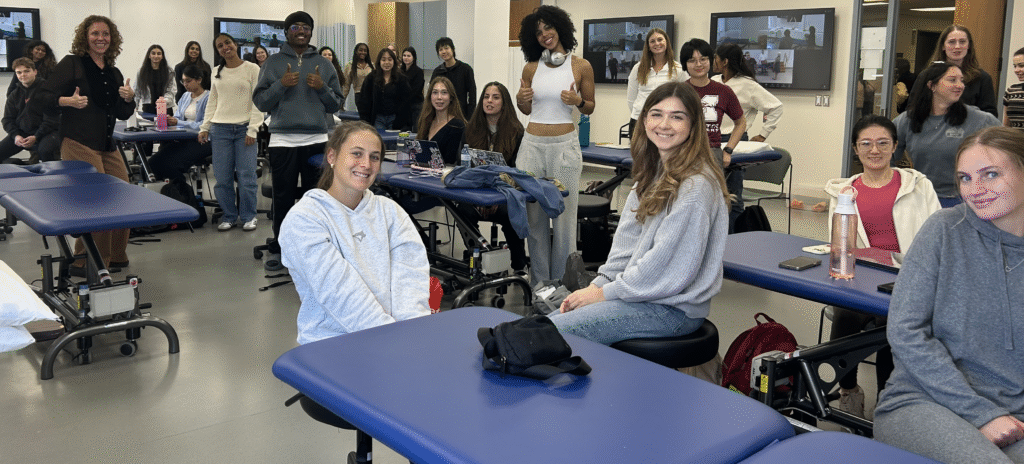
University of Toronto
OPA CEO Sarah Hutchison, joined by representatives from the Canadian Physiotherapy Association and the College of Physiotherapists of Ontario, met with first-year physiotherapy students at the University of Toronto on September 30.
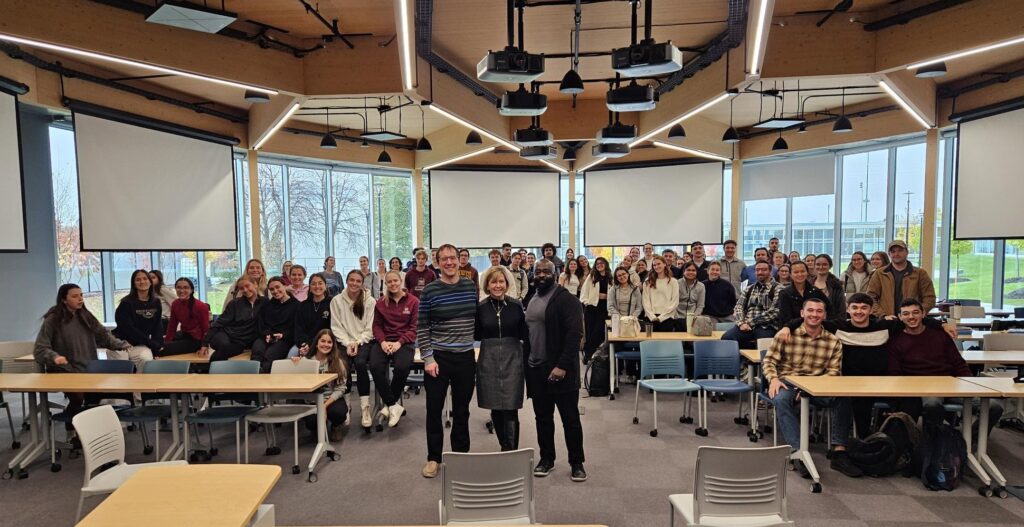
University of Ottawa
On October 21, Courtney Bean and Sarah Hutchison, and Director of Practice and Policy Emily Stevenson joined Stéphane Poitras at the University of Ottawa to connect with year 1 and year 2 physiotherapy students. Thank you to Stéphane for the invitation and to the students for such thoughtful questions and great conversation.
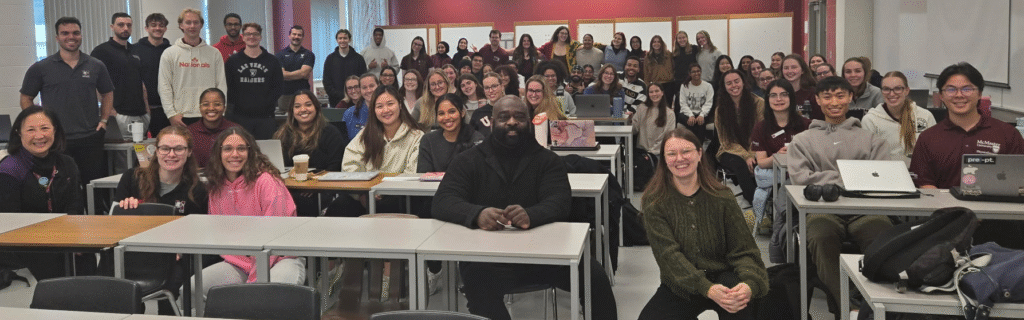
McMasterUniversity
Courtney Bean visited year 1 physiotherapy students at McMaster University on November 11. He engaged them in a conversation about the profession, advocacy, and the future of physiotherapy in Ontario.
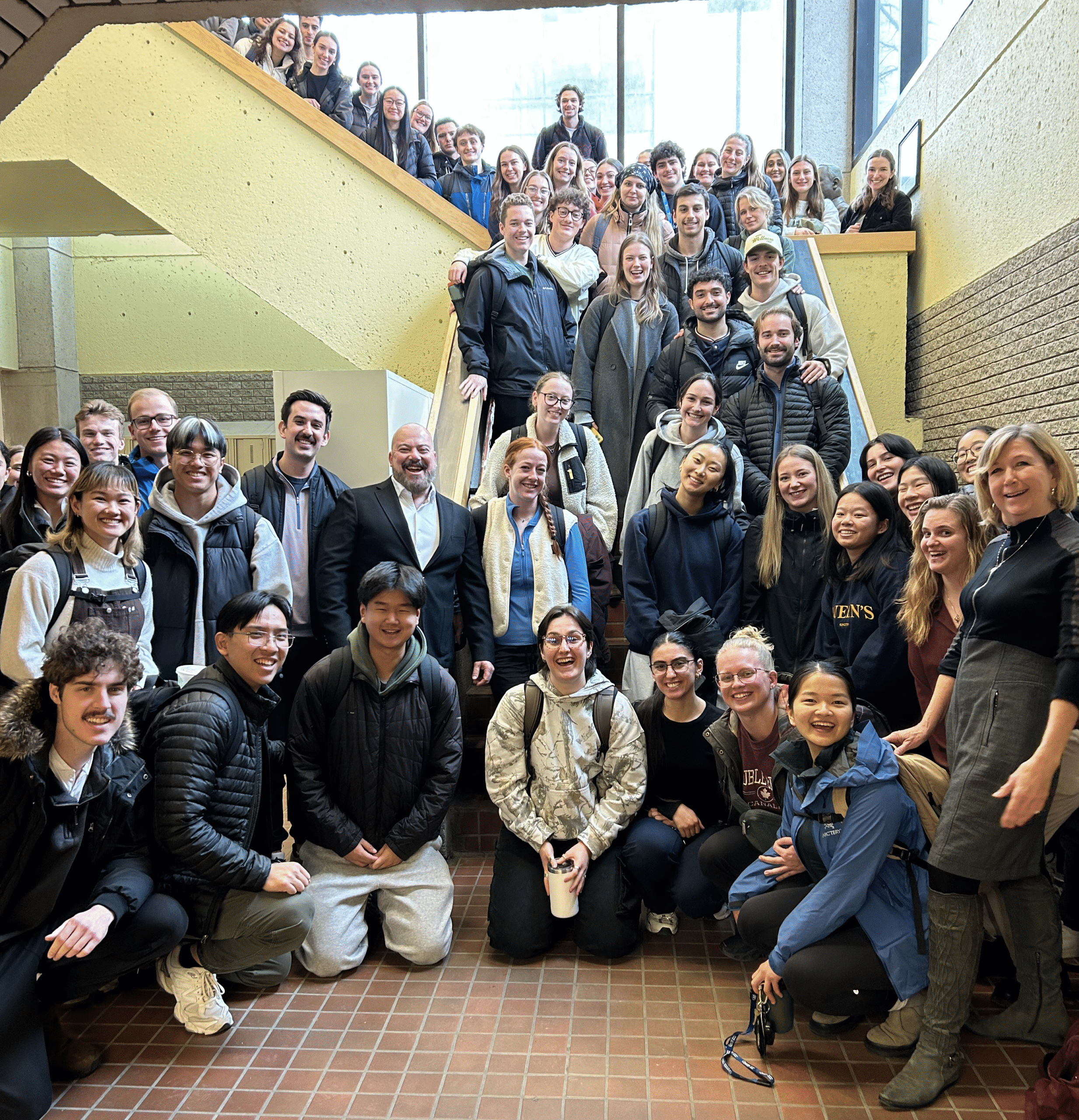
Queen’s University
Sarah Hutchison visited first-year physiotherapy students at Queen’s University on November 26 with Term Adjunct Lecturer Patrick Cayen.
Sarah spoke about membership, the profession’s future, and students’ path ahead as emerging clinicians. This visit also included a conversation about upcoming scope-of-practice changes and what this might mean when they graduate. It was a highly engaged class and a great discussion all around.
Western University
On December 1, Sarah Hutchison visited year 1 physiotherapy students in London, Ontario at Western University.
Our Commitment to Engage Students
These visits are part of OPA’s continued commitment to connecting with physiotherapy students across the province and supporting the next generation as they begin their journey in the profession. We appreciate their curiosity, questions, and enthusiasm for their future profession.
All Students Enjoy Free Membership
First and second year physiotherapy students in Ontario receive free membership in OPA/CPA.
Discover the resources, opportunities, and advocacy efforts designed explicitly for physiotherapy students and early-career professionals.
OPA/CPA membership is free for physiotherapy students enrolled in a program recognized by Physiotherapy Education Accreditation Canada, students in approved bridging programs for internationally educated PTs, and physiotherapist assistant students enrolled in formal education programs with accreditation or candidacy status.
When Natasha Bhesania graduated from the University of Toronto with a Master of Physical Therapy in 2007, she was immediately drawn to the intensity and complexity of acute care. She took on several roles across intensive care, neurotrauma, orthopedics, and general internal medicine units. A permanent role on Mount Sinai’s geriatric consult team eventually opened the door to a new opportunity that would push the boundaries of traditional physiotherapy practice.
Natasha initially began offering physiotherapy services in the emergency department for non-admitted patients. The goal was simple but powerful: to help avoid unnecessary hospital admissions. Recognizing the need for additional preparation, she completed several weekend courses on allied health in the emergency department to strengthen her skill set for this unique environment.
What started as a small 0.2 FTE addition to her full-time role quickly revealed its potential.
“I recognized the value of physiotherapy in the ED, particularly in preventing non-medical admissions, reducing length of stay through early mobilization, and facilitating discharge planning,” Natasha explains.
Inspired by this insight, she partnered with an occupational therapist colleague to launch a Science of Care quality improvement (QI) project. Together, they set out to demonstrate the impact of having full-time physiotherapy and occupational therapy coverage in the ED over a two week pilot as compared to baseline data of 0.2 PT/OT compliment over 2 years.
Their data told a compelling story: patients moved through the system more efficiently, hospital length of stay decreased, and satisfaction among physicians improved. The results were later presented at the International Learning Collaborative Conference in Portland, Maine in 2023. Natasha and her OT colleague’s quality improvement work was well-received by the ED staff. Earlier this year, Mount Sinai received funding from Ontario Health to support full-time PT and OT coverage in the emergency department. As of March 2025, the hospital now benefits from 12-hour physiotherapy and occupational therapy coverage on weekdays and 8-hour coverage on weekends from 2020 to 2022.
Natasha’s work extends well beyond mobility management. Physiotherapy assessments often provide valuable complementary insights that support the overall clinical picture. “Our functional assessments can sometimes highlight neurological changes—such as signs consistent with stroke or early Parkinson’s Disease—that may not yet be evident on initial imaging,” she explains. These observations often lead to collaborative discussions with physicians and other team members, helping guide further assessment and contributing to diagnosis. It’s a strong example of how physiotherapists play an integral role in enhancing patient care through interprofessional teamwork.
Innovative Care
Innovation is central to Natasha’s approach. As part of the rehab team at Mount Sinai, she recently began integrating the Clinical Frailty Scale (CFS) into initial assessments for patients over 65, which helps guide discharge pathways with the goal of ensuring that both admitted and non-admitted patients receive the most appropriate care trajectory. It’s a data-informed strategy that enhances efficiency and targets resources where they’re needed most.
The impact is especially clear in key populations. “Our assessments are critical in the non-operative management of fractures following falls, particularly in older adults,” Natasha says. From prescribing gait aids and connecting patients to community resources and facilitating inpatient rehab applications directly from the emergency department, her interventions often help prevent avoidable hospital admissions. She also plays a pivotal role in managing pain for patients with musculoskeletal injuries, which is an area where early education and treatment can significantly affect outcomes.
Health System Impacts
Importantly, Natasha’s work supports broader system goals. By conducting early functional assessments, she helps minimize patient deconditioning, enables direct transfers to rehab, and contributes to smoother patient flow through the ED. “We are key contributors to disposition planning from the emergency department” she says. It’s a role that combines clinical skill with system thinking and it’s making a measurable difference.
To decision-makers across the health system, Natasha offers a clear message: “As our population ages and community resources remain limited, physiotherapists in the emergency department are essential for early assessment, mobilization, and discharge planning. We have the expertise to optimize function and facilitate safe transitions, whether back home or into rehab, directly from the emergency department.”
And while she’s passionate about advocacy, Natasha emphasizes that it must be grounded in evidence. The QI project she helped co-lead serves as a model not just for funding conversations, but for demonstrating the cost-effectiveness and value of physiotherapy in emergency care.
“Advocacy should be grounded in research and data,” she says. “By highlighting existing evidence, including our own QI project, we can demonstrate the value and cost-effectiveness of physiotherapists in emergency care.”
A Day in the Life
A day in Natasha’s life is fast-paced and ever-changing, which is exactly how she likes it. She starts by scanning the emergency department census to identify patients who could benefit from physiotherapy. These patients might be older adults recovering from a fall, individuals with musculoskeletal injuries, or those with mobility challenges or complex discharge needs. From there, she collaborates with the broader care team to determine who is medically stable and appropriate for physiotherapy intervention. Her work includes bedside assessments, gait aid prescriptions, education on safe mobility, and input on discharge planning, all of which is aimed at avoiding unnecessary admissions and ensuring safe, timely transitions of care.
“No two days in the ED are ever the same, and that’s part of what makes this role so dynamic and rewarding,” she reflects. It’s a role that blends clinical expertise, system navigation, and patient advocacy, and it shows just how far physiotherapy can go when professionals like Natasha are empowered to work to their full scope of practice.
Are You our Next Member Spotlight?
Do you want to be featured? Are you in an innovative role? Spoken about physiotherapy in a podcast or the news? Published an article? Or represented the physiotherapy profession through advocacy?
We want to celebrate you as a physiotherapist, PT or PTA student or PTA!