OPA met with the Ministry of Health (MoH)on Friday, March 27, 2026.
At this time, OPA has been advised that the TPA for the CPC Program is not ready for distribution. We appreciate that this uncertainty and delay will be frustrating for you recognizing that as we approach April 1, we are not able to share any information about changes in either EOC compensation or volume.
As you will be aware from our prior communications with you, we have strongly advocated for meaningful increases in both compensation for EOCs and the volume of EOCs that are allocated to the program given the demand for services in the community.
In discussion with the Ministry they have confirmed the following:
The exact date for the distribution of the next TPA cannot be confirmed and may not occur before April 1.
If you continue to provide services AFTER April 1 and BEFORE you are able to sign a new TPA you will be paid for those services IF YOU SIGN and return the new TPA once it is available. Funds cannot be flowed to you before the TPA is fully executed.
Once you receive the TPA the expectation of return is approximately two weeks. You will have to sign and return the TPA in order to be paid for any services that you provide after April 1, 2026 . The services after April 1, 2026, will be paid at the rate in the new TPA Agreement.
If you sign and return the TPA and later find the terms unacceptable, you can withdraw from the CPC Program. You will then be paid for any services delivered from April 1 until your withdrawal.
We will continue to meet with the CPC Program Team at the Ministry of Health and provide you with any updates as they are available.
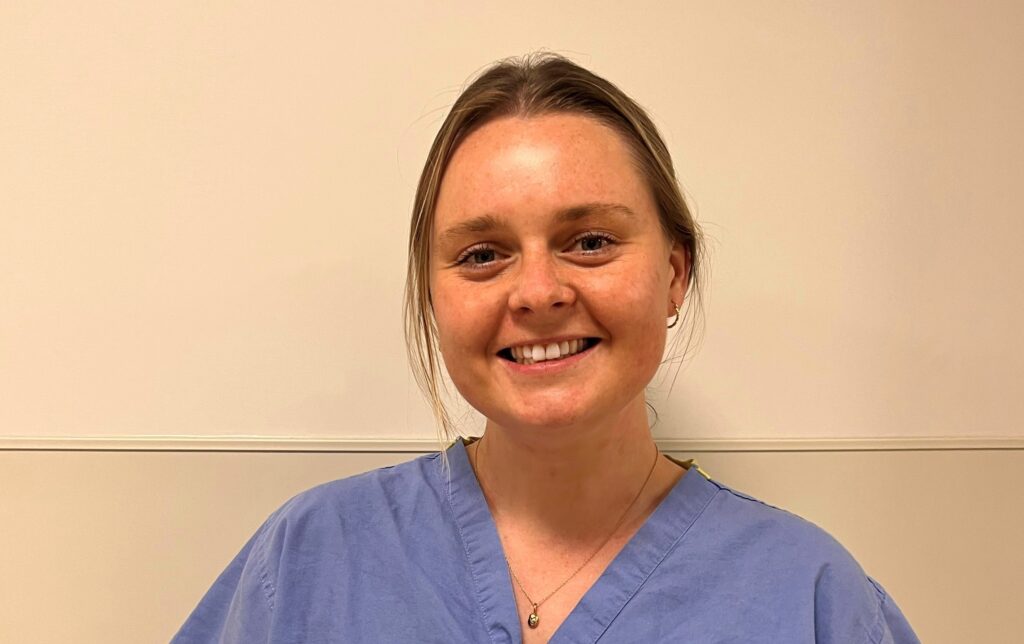
After graduating from Queen’s University in 2023, Madison Ames began her career as a physiotherapist at North York General’s Finch Site Reactivation Care Centre (RCC). Her early experience involved working with a geriatric alternate level of care (ALC) population, which supported patients who had been discharged from acute care but were not yet ready to return home safely.
“Our primary goal was to enhance patients’ functional mobility and support discharge planning, whether that meant returning home with supports, transitioning to community programs, or entering long-term care.” Madison explains. Later, she transitioned to the rehabilitation unit at Finch Site RCC, treating geriatric patients with varying rehabilitation needs.
Establishing the Emergency Department Role
In March 2025, Madison took on a completely new challenge: establishing a physiotherapy presence in the Charlotte & Lewis Steinberg Emergency Department (ED) at North York General Hospital (NYGH). It was as brand new position for this hospital. “I was responsible for developing and defining the scope of the physiotherapy role within this fast-paced environment,” she says.
Unlike most physiotherapy roles in emergency departments, Madison’s work primarily targets admitted patients who remain in the ED while awaiting a bed on an inpatient unit. With patients often spending more than 24 hours in the ED due to high hospital volumes, her role is critical in preventing early deconditioning. “These patients are at significant risk of complications like pneumonia, delirium, and functional decline,” she explains. Early mobilization is essential to preserving independence and ensuring a smoother recovery.
Because the role was entirely new, Madison had to build everything from the ground up.
“Through trial and error, I established an effective workflow and clinical routine,” she says. “A critical part of this role is determining which patients are appropriate for mobilization, particularly given the medical instability and diagnostic uncertainty often present at this stage.”
When patients present to the ED, there is often limited information available about their background and overall functioning. As one of the first health professionals to assess many of these patients, Madison plays a vital role in collecting functional and social histories, often uncovering information that hadn’t yet been captured. “Families and patients have disclosed falls, cognitive concerns, or weight loss that hadn’t come up in previous conversations,” she notes. “By identifying these concerns early, I am able to relay key information to the appropriate team members and support timely interventions during hospitalization.”
The value of Madison’s role expands far beyond her assessment skills and encompasses the compassion and patient-centered approach she brings. “Even though I may have seen many patients with similar conditions, I remind myself that for the individual in front of me, this is new, frightening, and overwhelming,” she reflects. “What feels routine to me as a healthcare provider is, to them, a life-altering moment.”
Her role has been particularly impactful with geriatric patients suffering from conditions like urinary tract infections, pneumonia, delirium, and failure to cope. Madison’s role is critical in these cases, as this patient population is at risk for significant decline after only a few days of hospitalization: “A patient who walked independently at home could become unable to ambulate more than five meters after just one or two days in hospital,” she explains. Interventions such as therapeutic ambulation, supporting patients to mobilize to the washroom, transferring to a bedside chair for meals, or simply encouraging them to dangle at the edge of the bed can have a significant impact on reducing deconditioning and maintaining functional independence.
In addition to preventing deconditioning, Madison’s assessments often support complex discharge planning. She assists with stair assessments, mobility strategies for patients with complex conditions, and supports discharges directly from the ED, helping avoid unnecessary hospital admissions.
Collaborative Care and System-Wide Impacts
Madison’s role also aligns closely with system-level goals like reducing hallway medicine and improving patient flow. Collaborating with the Geriatric Emergency Management (GEM) nurses, Madison has helped streamline transfers directly to inpatient rehabilitation facilities, thereby avoiding acute admissions and ensuring patients receive the focused support they need.
“Through established relationships with several rehabilitation hospitals across the Greater Toronto Area, we have developed an efficient process to identify suitable patients [for inpatient rehab], set goals and care plans, complete applications, and successfully facilitate admissions and same-day transfers,” Madison shares. This process has been particularly impactful in reducing admissions to acute care units and reducing the associated risks.
To make a lasting impact, Madison believes it’s critical for both decision-makers and healthcare providers to recognize the value of physiotherapy and early mobilization. “Deconditioning begins within hours of immobility,” she stresses. “In just 24 to 48 hours, patients begin to lose strength, limiting their ability to perform basic functional tasks.”
Madison points out that one in five geriatric patients develops delirium after just 12 hours in the ED. “Facilitating mobility…can help maintain orientation and reduce the risk of delirium,” she says.
For other hospitals or leaders looking to replicate this model, Madison emphasizes the need to educate all staff members about the role and benefits of physiotherapists in this setting. Madison notes the equal importance of empathy and compassion in the emergency department “Patients are often in pain, unwell, anxious, or uncertain about next steps, [and] understandably, walking or mobilizing is not always something they feel ready to do.”
A Day in the NYGH Emergency Department
A typical day for Madison begins with reviewing consults and prioritizing patients. Her caseload can vary from just a few consults to over 40 in a given shift. “On high-volume days, when it is not feasible to assess every patient, I begin with a brief chart review to identify priorities,” she explains. She often prioritizes geriatric patients, those with the longest ED stay, and those at high risk of deconditioning. Detailed chart reviews, collaborative discussions with interdisciplinary team members, and care coordination are all part of Madison’s role in the emergency department. Between assessments, treatments, and documentation, Madison manages to maintain a level of flexibility, allowing her to respond to emerging needs throughout the day.
Looking ahead, Madison believes advocacy and funding roles like hers are essential to transforming patient care.
“Having a physiotherapist embedded in the ED… helps reduce the risk of deconditioning,” she says. “Patients are mobilized sooner; their mobility status recommendations are clearly documented, and unit physiotherapists receive patients with a more complete understanding of their functional baseline and discharge plan.”
Are You our Next Member Spotlight?
Do you want to be featured? Are you in an innovative role? Spoken about physiotherapy in a podcast or the news? Published an article? Or represented the physiotherapy profession through advocacy?
We want to celebrate you as a physiotherapist, PT or PTA student or PTA!
OPA is excited to celebrate the Ontario winners of the CPA Awards!
Helen Johnson – Life Membership Award
This award is presented to current or former CPA members who have contributed to the growth of the profession through at least 25 years of service at local and/or national levels.
Helen Johnson has been an active volunteer with the Ontario Physiotherapy Association for many years. She was the District President for the Windsor District, was a volunteer, and has presented multiple times at our conference, InterACTION. She also volunteered on our committees and Board of Directors, and contributed her voice to OPA’s advocacy.
Helen is also the 2006 recipient of the Professional Contribution – External, OPA Award.
Parag Shah – Clinical Education Award
Congratulations to Parag Shah, an Ontario member, for winning the Clinical Education Award. This award is presented to a member who has made outstanding contributions to the clinical education of physiotherapy students.
Alyssa Benitez – H. S. Rahikka Student Leadership Award
Alyssa Benitez is the Co-President of the Central Toronto District of OPA. We are excited to see her recognized nationally for her leadership skills! Congratulations Alyssa!
Iris Wang – H. S. Rahikka Student Leadership Award
The Helen Saarinen Rahikka Student Leadership Award is presented to a student member who has demonstrated leadership and made outstanding contributions to the promotion of the profession. Iris has participated in Ontario activities including joining us at InterACTION 2024 and acting as a voting delegate for OPA’s Annual General Meeting in 2025. Congratulations Iris!
OPA Continues to Advocate for CPC Program Participants & Patients
Sarah Hutchison, OPA CEO, and Emily Stevenson, Director of Practice and Policy, met with MoH CPC Program Leadership on Friday, February 27 on the status of the April 1, 2026 TPA.
The Ministry relayed three key updates at this meeting:
The next TPA will continue as a 2-year agreement – effective April 1, 2026. There are no changes to the text of the TPA as it relates to the terms and conditions of the program delivery other than #2 and #3 below.
The Ministry is exploring a rate increase per EOC; the amount has not been disclosed.
The Ministry is exploring a net increase in the total volume of EOCs allocated to OH regions with higher utilization rates and population growth. The increase in the number of EOCs being explored has not been disclosed.
Only 4 Weeks Away
There was acknowledgement that we are approximately 4 weeks away from the next agreement and it will be important to have a communication plan in place in the unlikely event that the TPA has not been provided to CPC participants before the 3rd week in March. In discussion with the Ministry CPC Program, OPA identified that some service providers may withdraw from the Program should the rate increase not be sufficient to address service sustainability and, given the timing of the contract and the need for service and care continuity for patients, a transition plan may be required.
OPA has scheduled meetings with the Ministry of Health (MoH) on March 20 and March 27 if needed.
OPA will apprise CPC Program participants of updates and the development of a contingency plan if needed.
Separately, the MoH CPC Program is developing a Program dashboard to increase visibility for Program outcomes and Program transparency.
About the Community Physiotherapy Clinic (CPC) Program
The CPC Program provides access to vital physiotherapy services throughout Ontario.
Launched in 2013, the CPC Program has provided almost 10 million treatments. It successfully complements diverse primary care, home care, integration, and care-continuity, all of which are government priorities.
Certain criteria apply for those who can seek treatment at a CPC. This includes seniors (65 and over), youth (under 19), people who have had an overnight hospital stay, or an outpatient/day surgery procedure and recipients of ODSP.
The CPC Program runs out of both hospital and community clinics across Ontario. Providers hold a Transfer Payment Agreement (TPA) with the Ministry of Health (MoH).
Program providers are allocated a certain number of Episodes of Care (EOCs) each year. The current EOC payment amount is $334.38.
Sarah Arulchelvam is a new to practice physiotherapist making impactful strides in a unique and evolving role in an Emergency Department (ED). With a passion for acute care and a flexible, team-based approach, she is helping to push the boundaries of physiotherapy practice in Ontario.
“I graduated from McMaster University’s physiotherapy program in August 2024, so I still consider myself a relatively new graduate,” Sarah explains. “After completing the program, I was drawn to the acute care setting because of the fast-paced, collaborative nature of the hospital environment.”
Sarah began her career at Michael Garron Hospital, a community hospital in Toronto, where she primarily worked in oncology and geriatrics. Her interest, however, in exploring different practice areas and settings developed early on.
“During school, I became aware of physiotherapy in the Emergency Department as an emerging role, though full-time opportunities were quite limited at the time,” she says. “So, when a position opened in the ED at Markham Stouffville Hospital, I was excited to take the opportunity and make that transition. I’m still new in this position and continue to learn and grow within the role, but it’s been a rewarding experience so far.”
Pushing Scope and Supporting Flow
Working in the Emergency Department requires adaptability and interdisciplinary collaboration. “In the ED, the dynamic and resource-limited environment often calls for physiotherapists to extend their role beyond traditional boundaries, always within safe, ethical, and team-based frameworks,” says Sarah.
“As the consistent allied health provider on the floor, I frequently take on tasks that support patient care and flow.”
Sarah often assists with occupational therapy responsibilities, such as equipment recommendations, activities of daily living (ADL) assessments, and basic cognitive screenings. She also initiates referrals to community services and contributes to discharge planning, all of which are roles that are not traditionally part of physiotherapy but are essential in this setting.
“I believe this kind of interdisciplinary flexibility is necessary in today’s emergency care settings and reflects how the physiotherapy role is evolving in acute environments like the ED.”
A Generalist Approach for Complex Care
Rather than narrowing her focus early, Sarah chose a broad clinical approach to meet the unpredictable needs of the ED. “As a new graduate, I bring current, evidence-based knowledge across all major areas of physiotherapy, including musculoskeletal (MSK), neurological, and cardiorespiratory,” she says. “I’ve embraced a generalist approach, which has been a real strength in the ED.”
This approach allows her to perform MSK special tests, vertigo assessments like the Dix-Hallpike, and assist in patient flow coordination. While some of these assessments are atypical for a hospital setting, they are critical for providing thorough assessments and optimal care.
Sarah also works closely with geriatric nurse practitioners to create discharge plans for non-admit older adults. She balances short-term supports with long-term planning, such as initiating long-term care applications or retirement home referrals.
Impact on Patient Outcomes and System Goals
The physiotherapy role in the ED is particularly impactful for non-admit patients such as those who receive care without being formally admitted. “A significant portion of these individuals are older adults who present with issues such as falls, pain, or difficulty coping at home,” Sarah explains.
“While they may not require hospital admission, their needs still warrant timely assessment and intervention.”
By optimizing mobility, supporting pain management, and contributing to discharge planning, Sarah helps prevent unnecessary admissions and ensures safe transitions back to the community.
“Although still early in my time in this role, I’ve seen firsthand how early physiotherapy involvement can support better patient flow and lead to more appropriate, timely discharges.”
She also emphasizes the importance of early mobilization in reducing deconditioning and contributing to shorter ED stays, especially for high-risk or geriatric patients.
Policy, Advocacy, and Education
Sarah believes that for system-level goals like reducing hallway medicine and readmissions, physiotherapists must be engaged from the outset. “Many government-funded clinical pathways are designed with the expectation of short hospital stays,” she explains. “To meet these timelines, system-level decision-makers must recognize that discharge planning begins the moment a patient is admitted.”
She urges policymakers to appreciate how early physiotherapy assessment can coordinate care and prevent complications.
“Early mobilization not only prevents deconditioning and reduces complications but also serves as a cost-saving strategy.”
More research is needed, particularly in Canada, to highlight the value of physiotherapy and early mobilization in EDs, she adds.
Sarah also wants fellow physiotherapists and health professionals to understand the unique demands of ED practice. “The ED is a dynamic and unpredictable environment. ED physiotherapists must be highly flexible. In addition to managing patients in the ED, we often function as float physiotherapists, assisting colleagues on inpatient units when needed.”
A Day in the Life
“A typical day for me as an emergency department (ED) physiotherapist runs from 9 am to 7 pm, and no two days are ever quite the same,” says Sarah. “The work is dynamic and often unpredictable. It requires flexibility, communication, and frequent coordination with various members of the healthcare team.”
Sarah begins by reviewing the ED patient count, focusing on non-admitted patients. She often collaborates with the geriatric emergency management (GEM) nurse practitioner and works with the Access and Flow team to identify patients who may benefit from physiotherapy.
After chart reviews, she typically sees patients in blocks of two or three, checking with bedside nurses first and often hunting down essential equipment. “ED mobility aids like two-wheeled walkers and canes tend to go missing due to fast patient turnover, so I frequently search the department or even other units,” she explains.
Assessments may require creativity and often involve adapting to the available physical environment and maintaining ongoing communication with physicians, occupational therapists, and flow coordinators to ensure a safe discharge.
“Since the ED is constantly evolving, I regularly check for PT referrals throughout the day. New patients are always arriving or being flagged for discharge, so it’s important to stay on top of the caseload daily.”
She also supports other departments when the ED is quieter. “Ultimately, working in the ED requires not only clinical expertise but also strong collaboration, creativity, and a proactive mindset to support patient flow, safety, and quality care under high-pressure conditions.”
Sarah’s experience highlights not only the evolving scope of physiotherapy but also the profession’s vital contribution to system-wide healthcare goals. Her story offers inspiration and insight for other physiotherapists, whether they are new graduates or seasoned clinicians. It’s a compelling case for why more ED-based physiotherapy roles are deserving of increased funding and support.
Are You our Next Member Spotlight?
Do you want to be featured? Are you in an innovative role? Spoken about physiotherapy in a podcast or the news? Published an article? Or represented the physiotherapy profession through advocacy?
We want to celebrate you as a physiotherapist, PT or PTA student or PTA!