skip to content

Scope of Practice Announcement from Government of Ontario 

On May 11, 2026, the Ontario Ministry of Health announced future scope of practice expansions for several regulated health professionals, including physiotherapists. The Ministry has directed the College of Physiotherapists of Ontario to begin developing the regulatory framework to support qualified physiotherapists in ordering certain X-rays and diagnostic ultrasound. 

As indicated in the Government of Ontario news release “… the government has now officially directed Ontario’s regulatory colleges for optometrists, physiotherapists, chiropractors, dental hygienists, denturists, and audiologists and speech-language pathologists to begin developing the regulatory framework that would further expand scopes of practice in their fields.”

What This Means Right Now  

It’s important to note that no changes to physiotherapists’ scope of practice have been implemented yet regarding x-rays and diagnostic imaging. The College of Physiotherapists of Ontario is beginning the work to develop the regulatory framework. OPA will continue to collaborate with the Ministry of Health and the College as the process moves forward. 

Progress  

We are hopeful, however, that this announcement demonstrates that the Ministry of Health is moving in the right direction to implement the remaining scope of practice changes for physiotherapists. 

Background 

OPA has tirelessly advocated for nearly two decades to advance scope of practice changes that enable physiotherapists to deliver more comprehensive care.  

In 2008, the Ontario Physiotherapy Association and the College of Physiotherapists of Ontario collaborated on a joint submission requested by the Health Professions Regulatory Advisory Council (HPRAC) to review the scope of practice of physiotherapists. 

Successes to Date 

This joint submission proposed scope of practice amendments, which were all accepted and recommended for implementation by HPRAC, except for one – the authority to refer to specialists.   

In 2012, physiotherapist’s scope expanded to include: 

  • Communicating a diagnosis (controlled activity that is within scope at the entry to practice level) 
  • Treating a wound below the dermis 
  • Internal pelvic exams (including putting an instrument, hand or finger beyond the labia majora or beyond the anal verge) 
  • Administering a substance by inhalation (when the substance has been ordered by an authorized person) 

Why We Continue to Advocate 

Awaiting implementation and not able to put into practice:   

  • Ordering a prescribed form of energy (e.g., diagnostic ultrasound or MRI) 
  • Ordering diagnostics (e.g., X-rays or CT scans) 
  • Ordering laboratory tests 

OPA’s Continued Advocacy 

Current advocacy on PT scope of practice focuses on implementing outstanding changes for activities that still need regulation changes, including ordering diagnostic imaging. Implementation will positively affect access to care, improve health system efficiency, and reduce workloads for all providers. It will lead to people in Ontario getting the right care at the right time, and better sustainability in career paths for physiotherapists.    

Stay Up-to-Date 

We encourage you to watch for further updates from both OPA and the College. Be sure to check OPA’s news where you can filter to access all scope of practice updates. Check out our dedicated Scope of Practice page for the latest information as this process unfolds.   

Speeches, Elections and More…OPA’s Annual Members Meeting

About OPA Leadership and the AMM

The Ontario Physiotherapy Association is led by its members through the Board of Directors. Nine physiotherapist members make up the OPA Board, all of whom carry fiduciary responsibilities. Board members dedicate significant time and energy to guide the Association toward its mission.

The Annual Members Meeting (AMM) is a time to gather voting delegates from across OPA’s 16 districts to hear about and vote on the business of the Association.

Annual Members Meeting Success!

OPA’s 2026 Annual Members Meeting took place virtually on Thursday, April 30. OPA welcomed 62 voting delegates, our appointed Parliamentarian and Scrutineer, Jason Robinson, OPA’s current Board of Directors, candidates for the 2026-2027 Board, guests, and staff.

The meeting was a great success with Courtney Bean, OPA’s President (at the time of the meeting) acting as Chair. Alison Stene, CPA’s President, shared news and updates from the Canadian Physiotherapy Association. Magda McCaughan presented OPA’s achievements for the last year in her Secretary’s report. Sarah Hutchison, OPA’s CEO, presented OPA’s audited financial statements.

Voting delegates approved the 2025 audited financial statements and approved Cooper and Company as the auditors for the 2026 fiscal year.

Election of 2026-2027 OPA Board of Directors

There were six candidates for four director positions, therefore OPA held an online election managed by our Parliamentarian. Each candidate spoke for three minutes, and candidate resumes, videos and letters of intent were pre-circulated. 62 voting delegates cast 62 votes and four directors were elected.

We welcome Charlotte Anderson as OPA’s President with Courtney Bean now acting as Past-President. David Egbert, Jennifer Howey, and Terry Wang are completing the second year of their first terms on the Board.

Anthony Grande and Carrie Lau were elected to join the 2026-2027 Board of Directors. We welcome back Wing Ting Truong and Kyle Whaley for their second two-year term.

OPA would like to sincerely thank Magda McCaughan for her four years of insightful contributions on the Board as a Director and Secretary. Magda has been a dedicated volunteer for many years, having previously served as Hamilton’s District President.

We would also like to thank Manuel Valle, who has made invaluable contributions on the OPA Board of Directors for the past two years. Manuel has been a significant advocate for internationally educated physiotherapists, and we will miss his voice on the Board.

OPA also sincerely appreciates members who make the decision to run for the Board of Directors. Venkadesan Rajendran has been an incredible and passionate volunteer for years having served as the District President and in other executive roles with the Northern Ontario District.

OPA hopes to continue our valuable volunteer relationships with Magda, Manuel and Venkadesan! Thank you to the 62 voting delegates who took time out of their busy schedules to participate in OPA’s Annual Members Meeting. We also appreciate our volunteers Jim Foley and Annette Marcuzzi for their contributions.

The Case for Publicly Funded Physiotherapists: From Emergency Departments to Community Physiotherapy Clinics

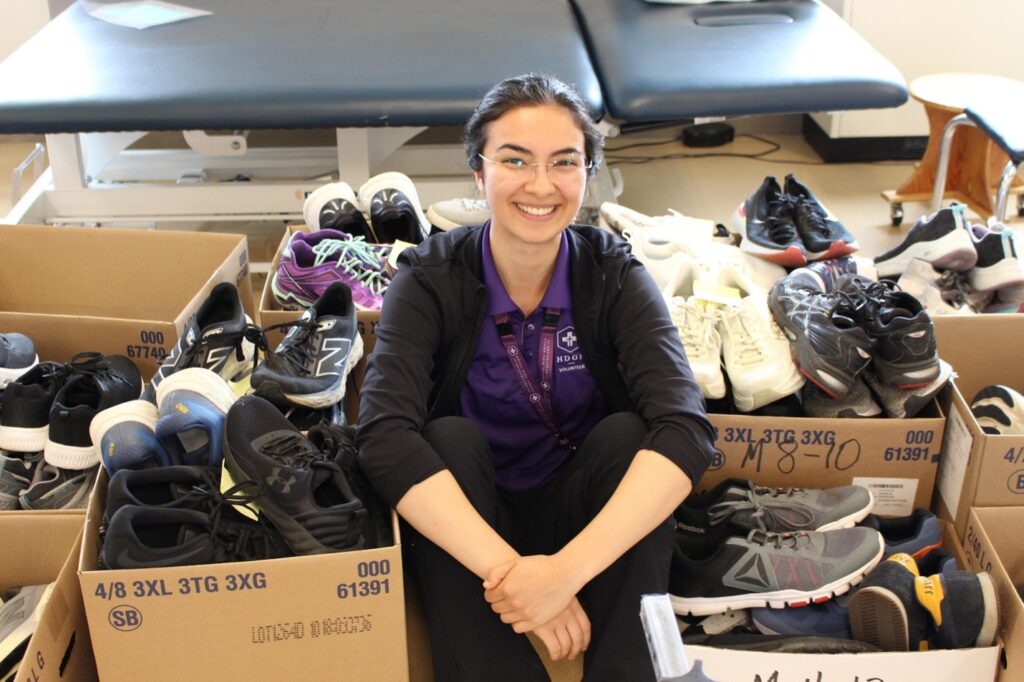
Makaila Koshurba, Physiotherapist with Riley Pedulla, Physiotherapist, work in Ontario Emergency Departments

Makaila Koshurba and Riley Pedulla are dedicated physiotherapists working in emergency departments (EDs) in Ontario. Their work is critical to reducing the burden on physicians in the Emergency Department, and their work also benefits patients who need physiotherapy.

Once assessed and treated, Makaila and Riley often refer patients to publicly funded physiotherapy clinics in the community, called Community Physiotherapy Clinics (CPCs), for follow-up care. Makaila and Riley see every day how critical it is to have publicly funded physiotherapists both in the ED and in the community.

“As physiotherapists (PTs) in the ED, we know from firsthand experience the benefits of Community Physiotherapy Clinics. Daily, we assess and treat patients who benefit significantly from physiotherapy follow-up in the community. These patients often cannot afford private physiotherapy services and are referred to a CPC when eligible. Funding stagnation of the CPC program puts a large population at risk of losing access to essential care.

CPCs prevent 70,000 ED visits annually and lack of support for the program risks increasing the burden on EDs as these patients return seeking answers to questions about their diagnosis, rehabilitation, and return to function.”

Despite a proven track record that Community Physiotherapy Clinics reduce strain on the healthcare system, the Ontario government recently notified CPCs that there will be no change to patient funding or program capacity over the next two years. CPCs are already underfunded and at capacity: this lack of investment is increasingly compromising access to care for those patients who need it the most. 

CPCs reduce visits to primary care, emergency departments (EDs), specialists, and prevent acute care admissions. This dearth of funding puts our patients and clinics at risk as service provision cannot keep up with patient needs. The CPC funding issue creates a large gap in the continuum of physiotherapy services from acute care to community-based care. 

Physiotherapists are Also Needed in Every Emergency Department 

There is a significant opportunity to ensure PTs are placed in all EDs across the province as well, and to utilize the PT scope of practice to the fullest extent. For many patients, especially those without private health insurance or access to publicly funded services, ED-based physiotherapy may be their only timely, affordable option for physiotherapy care. 

“In our experience, both patients and physicians have called the patient-centred, compassionate, and comprehensive approach that physiotherapists provide an essential part of healthy recovery.” 

Physiotherapists help patients feel more confident at discharge and help physicians by tackling cases that require more support than can usually be provided in busy EDs. Patients who see ED physiotherapists receive non-pharmacological pain management strategies, clarity about their prognosis and diagnosis, and activity modifications to help them return to the community. 

Increasingly, Ontario EDs have physiotherapists who assess and manage care for patients presenting with cardiorespiratory, neurological, and/or musculoskeletal (MSK) complaints. ED PTs see a variety of patients ranging from elderly people with hip fractures to young athletes worried about a concussion, and everything in between.  

Growing evidence supports the integration of physiotherapy in EDs highlighting significant benefits such as reduced wait times, improved patient satisfaction, and potential cost savings (Ocampo-Chan & Levy, 2025). However, not all Ontario EDs have physiotherapists, and not all physiotherapy care models in EDs are the same.

CPCs Essential for Preventing Emergency Visits and Future Injuries

A key part of the physiotherapist’s ED role is also to direct patients to the appropriate follow up care. However, without a reliable follow-up point of care like the CPCs, Makaila and Riley anticipate a higher rate of return to emergency departments for this patient population. The importance of CPC programming cannot be understated. Patients seen in the ED benefit from access to CPCs to continue their care, fully rehabilitate, and prevent future injuries. The budget silence on CPC is not just a physiotherapy issue; it negatively impacts the residents of Ontario, their local EDs, and ultimately burdens an already strained system. 

CPCs have been a staple in community care and continue to provide people in Ontario with essential services. Program funding should reflect the indispensable nature of the services provided. Furthermore, dedicated physiotherapists should also be available in every Ontario ED. 

Take Action Now 

We ask that our physiotherapy colleagues support OPA’s advocacy by signing the petition in response to the CPC funding crisis.  

We also ask that those working in an acute care setting consider whether their ED has dedicated physiotherapy coverage, and if not, to consider advocating for it. It is time that our staffing models, funding structures, and our government catch up to what the evidence and our patients have been telling us for years. 

Sign OPA’s Petition

OPA continues to advocate for the Government of Ontario to reconsider their decision to provide no increases to funding or capacity in the CPC program. Join our advocacy by signing our petition, write your local MPP or sign your name to our letter to Premier Doug Ford and Minister of Health Sylvia Jones. Contact OPA with any questions.

About Makaila and Riley

Makaila Koshurba and Riley Pedulla are Registered Physiotherapists working in urban EDs. They are passionate about healthcare quality, health equity, and health system transformation. The views expressed in this article are those of the authors alone and do not represent the positions of their employers or affiliated institutions.

Background on Discussion with Makaila and Riley

Courtney Bean, OPA President, Charlotte Anderson, OPA President Elect,  Sarah Hutchison, OPA CEO and Emily Stevenson, Director of Practice and Policy met with Makaila and Riley on their expanding role in emergency department triage and their need to ensure that there are community resources to re-direct eligible patients to for care. The discussion informed OPA’s interest in publishing this article.

References

1. Tepper, J., et al. (2016). (rep.). Under Pressure: Emergency Department Performance in Ontario. Retrieved April 22, 2026, from https://www.hqontario.ca/Portals/0/documents/system-performance/under-pressure-report-en.pdf.

2. Ocampo-Chan, S. A., & Levy, C. (2025). Rehabilitation in emergency departments: A regional scan and future opportunities. Healthcare management forum, 38(3), 263–272. https://doi.org/10.1177/08404704241292240

NDP Calls Out Government of Ontario for Shortchanging Physiotherapy 

NDP Shadow Minister of Health MPP France Gélinas (Nickel Belt) released the following statement in response to the Minister of Health’s near frozen budget for the last 13 years, for community physiotherapy services. 

“Access to Physiotherapy is an important part of staying healthy after an injury or surgery. Patients get back to work sooner and rely less on pain killers during recovery. I agree with the Ontario Physiotherapy Association that the Ford government and Health Minister Sylvia Jones are not recognizing the value that physiotherapists add to our health care system.” 

Recent Announcement

The Ontario Physiotherapy Association sounded the alarm on April 15, 2026, regarding the Community Physiotherapy Clinic (CPC) Program lack of funding. The Government of Ontario recently notified CPC clinics that there is no increase in patient funding or program capacity for the next two years. Despite a proven track record of saving healthcare dollars, the program has been pushed to a breaking point due to chronic underfunding over the last 13 years.

About the CPC Program 

The CPC Program is a vital health service for patients who qualify, mostly seniors, and those who do not have private insurance. 

Investing in this program is one of the most cost-effective ways to support the provincial healthcare budget. The CPC Program currently delivers extraordinary value: 

  • System Savings: Every $1 invested in the CPC Program saves the government $4 in other healthcare costs.  
  • Emergency Prevention: The program prevents 70,000 emergency department visits annually.  
  • Reduced Strain: It reduces hospital admissions, diagnostic imaging costs, surgeries, and specialist consultations.  
  • A single emergency department visit costs $275. The CPC Program’s value is clear, but the government isn’t investing to match it. 

The Ontario Physiotherapy Association calls on the Ford government to think again and provide immediate, sustainable funding to ensure that seniors and vulnerable populations living in Ontario are not left behind.   

Ford Government Pushes Community Physiotherapy Clinic Program Into Funding Crisis

The Ontario Physiotherapy Association (OPA) is sounding the alarm as the Community Physiotherapy Clinic (CPC) Program faces a critical funding crisis that will hurt communities across Ontario. 

Despite a proven track record of saving healthcare dollars, the program has been pushed to a breaking point due to chronic underfunding over the last 13 years. Current Government funding is currently less than clinics’ costs of delivering the service. Regardless, the government recently notified clinics that there is no increase in patient funding or program capacity for the next two years. 

Many CPC clinics are small businesses that cannot sustain such continuing losses and will have to exit the Program. That will leave many communities without access to publicly-funded physiotherapy, after surgery, or injury. 

The CPC Program is a vital health service for patients who qualify, mostly seniors, and those who do not have private insurance. With seniors making up over 80% of the program’s patients, the lack of adequate funding puts thousands at risk.    

Sarah Hutchison, CEO of the Ontario Physiotherapy Association, stated: 

Despite a commitment to end hallway medicine and increase investments in primary care and home care, it appears that this government undervalues the Community Physiotherapy Program’s role in achieving both objectives. There is no increase in funding for physiotherapy clinics who deliver care and no response to the growth of wait lists and wait times for services. A mere $20 increase in funding over 13 years speaks for itself.”  

Reflecting on the government’s position, OPA President Courtney Bean stated: 

 “The news regarding the government’s lack of support for Community Physiotherapy Clinics (CPCs) is deeply troubling and inconsistent with what Ontario seniors and our health-system partners need in 2026. As our acute care system is under increasing strain, our health system needs better access to rehabilitation and the ability for people to stay independent in their homes and communities. Despite this, access to valuable care by physiotherapists through CPCs is being challenged. This lack of funding will erode access to already strained services for many seniors living in this province.” 

The Ontario Physiotherapy Association calls on the Ford government to think again and provide immediate, sustainable funding to ensure that seniors and vulnerable populations living in Ontario are not left behind. 

Background

An Undeniable Return on Investment

Investing in this program is one of the most cost-effective ways to support the provincial healthcare budget. The CPC Program currently delivers extraordinary value: 

  • System Savings: Every $1 invested in the CPC Program saves the government $4 in other healthcare costs. 
  • Emergency Prevention: The program prevents 70,000 emergency department visits annually. 
  • Reduced Strain: It reduces hospital admissions, diagnostic imaging costs, surgeries, and specialist consultations. 
  • A single emergency department visit costs $275. The CPC Program’s value is clear, but the government isn’t investing to match it. 

The Widening Gap in Care 

The disparity between Ontario’s growing population and needed health care funding is stark: 

  • Population Growth: Ontario’s senior population has grown by 940,000 since 2013. 
  • Stagnant Access: In that same period, available CPC referrals have grown by only 17,000. 
  • Underfunding: While operating costs have increased 40%, referral funding has increased only 6%. 

On a Dangerous Path

OPA notes that the funding for the CPC Program directly impacts funding for other programs, including the Bundled Care program for hip and knee replacements. If the government underinvests today, it sends a message devaluing access to needed physiotherapy services that support a return to function, and shifts the burden of care to other parts of our health care system.     

OPA Thanks Volunteers

April 19 –25, 2026 

This National Volunteer Week, the Ontario Physiotherapy Association wants to take a moment to say thank you.  
 
To every OPA volunteer who has given their time, expertise, and energy to the Association, your contributions matter deeply. You are the reason OPA is able to advocate, evolve, and remain relevant to the members and profession it serves. 

What Volunteers Make Possible 

OPA volunteers show up in so many ways. Whether you’re guiding the Association’s strategic direction as a member of the Board of Directors, bringing local voices to the provincial stage at the District level, engaging with government and stakeholders on behalf of the profession, or advising staff and leadership on sector-specific issues through a committee, the work you do is invaluable. 

You bring more than your professional knowledge to these roles. You bring your perspective, your passion, and your commitment to a profession that improves the lives of patients across Ontario every day. It’s the shared dedication between volunteers, staff, and leadership, that makes OPA’s success possible. 

Member volunteers are essential to the work and vision of OPA. They provide their experience, expertise and passion to support and strengthen the Association and the profession. 

Members Advancing Physiotherapy Through Community Engagement 

OPA volunteers are the living expression of what it means to be part of a member-led association. By dedicating your time to this work, you are not just supporting OPA, you are shaping the future of physiotherapy in Ontario. Your involvement ensures that the profession’s voice is heard, that decisions reflect the realities of practice across every sector and corner of the province, and that the next generation of physiotherapists inherits a stronger profession than the one before. 

The impact of your service extends well beyond board tables and committee calls. It is felt in advocacy wins, in the resources available to members, in the professional development opportunities offered, and in the trust that patients and policymakers place in physiotherapy across Ontario. 

OPA Volunteers Gain Immeasurably  

Volunteering with OPA impacts the lives of the volunteers. They  often tell us they have: 

  • Built meaningful connections with colleagues and partners from across the province 
  • Grown as leaders, communicators, and strategic thinkers 
  • Gained insight into the broader health system and the profession’s place within it 
  • Found a deeper sense of purpose and connection to the work of physiotherapy 

Inspired to Get Involved? 

If you’re an OPA member who has been thinking about getting involved, there is a place for you. Apply to join the Board of Directors, join one of our eight committees or participate locally with our Districts. Learn more about volunteering or reach out to us at physiomail@opa.on.ca with any questions. 

Update on CPC TPA 

OPA Meeting with Ministry of Health 

OPA met with the Ministry of Health (MoH)on Friday, March 27, 2026. 

At this time, OPA has been advised that the TPA for the CPC Program is not ready for distribution. We appreciate that this uncertainty and delay will be frustrating for you recognizing that as we approach April 1, we are not able to share any information about changes in either EOC compensation or volume.  

As you will be aware from our prior communications with you, we have strongly advocated for meaningful increases in both compensation for EOCs and the volume of EOCs that are allocated to the program given the demand for services in the community.   

In discussion with the Ministry they have confirmed the following:  

  1. The exact date for the distribution of the next TPA cannot be confirmed and may not occur before April 1.  
  1. If you continue to provide services AFTER April 1 and BEFORE you are able to sign a new TPA you will be paid for those services IF YOU SIGN and return the new TPA once it is available. Funds cannot be flowed to you before the TPA is fully executed. 
  1. Once you receive the TPA the expectation of return is approximately two weeks. You will have to sign and return the TPA in order to be paid for any services that you provide after April 1, 2026 . The services after April 1, 2026, will be paid at the rate in the new TPA Agreement. 
  1. If you sign and return the TPA and later find the terms unacceptable, you can withdraw from the CPC Program. You will then be paid for any services delivered from April 1 until your withdrawal. 

We will continue to meet with the CPC Program Team at the Ministry of Health and provide you with any updates as they are available. 

Ontario Winners of CPA Awards 

OPA is excited to celebrate the Ontario winners of the CPA Awards!

Helen Johnson – Life Membership Award 

This award is presented to current or former CPA members who have contributed to the growth of the profession through at least 25 years of service at local and/or national levels.  

Helen Johnson has been an active volunteer with the Ontario Physiotherapy Association for many years. She was the District President for the Windsor District, was a volunteer, and has presented multiple times at our conference, InterACTION. She also volunteered on our committees and Board of Directors, and contributed her voice to OPA’s advocacy.  

Helen is also the 2006 recipient of the Professional Contribution – External, OPA Award. 

Parag Shah – Clinical Education Award 

Parag Shah, Physiotherapist and winner of the Clinical Education Award from CPA

Congratulations to Parag Shah, an Ontario member, for winning the Clinical Education Award. This award is presented to a member who has made outstanding contributions to the clinical education of physiotherapy students. 

Alyssa Benitez – H. S. Rahikka Student Leadership Award 

Alyssa Benitez, Physiotherapist Student and winner of the H.S. Rahnikka Student Leadership Award from CPA

Alyssa Benitez is the Co-President of the Central Toronto District of OPA. We are excited to see her recognized nationally for her leadership skills! Congratulations Alyssa!

Iris Wang – H. S. Rahikka Student Leadership Award 

Iris Wang, Physiotherapist Student and winner of the H.S. Rahnikka Student Leadership Award from CPA

The Helen Saarinen Rahikka Student Leadership Award is presented to a student member who has demonstrated leadership and made outstanding contributions to the promotion of the profession. Iris has participated in Ontario activities including joining us at InterACTION 2024 and acting as a voting delegate for OPA’s Annual General Meeting in 2025. Congratulations Iris!

OPA Meets with Ministry of Health about CPC Program 

OPA Continues to Advocate for CPC Program Participants & Patients 

Sarah Hutchison, OPA CEO, and Emily Stevenson, Director of Practice and Policy, met with MoH CPC Program Leadership on Friday, February 27 on the status of the April 1, 2026 TPA.   

The Ministry relayed three key updates at this meeting: 

  1. The next TPA will continue as a 2-year agreement – effective April 1, 2026.  There are no changes to the text of the TPA as it relates to the terms and conditions of the program delivery other than #2 and #3 below. 
  1. The Ministry is exploring a rate increase per EOC; the amount has not been disclosed.  
  1. The Ministry is exploring a net increase in the total volume of EOCs allocated to OH regions with higher utilization rates and population growth. The increase in the number of EOCs being explored has not been disclosed.   

Only 4 Weeks Away 

There was acknowledgement that we are approximately 4 weeks away from the next agreement and it will be important to have a communication plan in place in the unlikely event that the TPA has not been provided to CPC participants before the 3rd week in March. In discussion with the Ministry CPC Program, OPA identified that some service providers may withdraw from the Program should the rate increase not be sufficient to address service sustainability and, given the timing of the contract and the need for service and care continuity for patients, a transition plan may be required.  

OPA has scheduled meetings with the Ministry of Health (MoH) on March 20 and March 27 if needed.   

OPA will apprise CPC Program participants of updates and the development of a contingency plan if needed. 

Separately, the MoH CPC Program is developing a Program dashboard to increase visibility for Program outcomes and Program transparency. 

About the Community Physiotherapy Clinic (CPC) Program   

The CPC Program provides access to vital physiotherapy services throughout Ontario.  

Launched in 2013, the CPC Program has provided almost 10 million treatments. It successfully complements diverse primary care, home care, integration, and care-continuity, all of which are government priorities.   

Certain criteria apply for those who can seek treatment at a CPC. This includes seniors (65 and over), youth (under 19), people who have had an overnight hospital stay, or an outpatient/day surgery procedure and recipients of ODSP.  

The CPC Program runs out of both hospital and community clinics across Ontario. Providers hold a Transfer Payment Agreement (TPA) with the Ministry of Health (MoH).  

Program providers are allocated a certain number of Episodes of Care (EOCs) each year. The current EOC payment amount is $334.38. 

Advocating for Greater Sustainability in the CPC Program

About the Community Physiotherapy Clinic (CPC) Program  

The CPC Program provides access to vital physiotherapy services throughout Ontario. Launched in 2013, the CPC Program has provided almost 10 million treatments. It successfully complements diverse primary care, home care, integration, and care-continuity government priorities.  

Certain criteria apply for those who can seek treatment at a CPC. This includes seniors (65 and over), youth (under 19), people who have had an overnight hospital stay, or an outpatient/day surgery procedure and recipients of ODSP. 

The CPC Program runs out of both hospital and community clinics across Ontario. Providers hold a Transfer Payment Agreement (TPA) with the Ministry of Health (MoH). The TPA is expected to be renewed in April 2026.  

Program providers are allocated a certain number of Episodes of Care (EOCs) each year. The current EOC payment amount is $334.38  

CPC Working Group Launched 

OPA struck a CPC Working Group in 2025 to help prepare for the forthcoming Transfer Payment Agreement (TPA) renewal in April 2026. The TPA is a binding contract between the Ministry of Health and an external recipient such as a license holder of a Community Physiotherapy Clinic to fund public services. The TPA determines the conditions under which providers are compensated by the Government of Ontario. 

What Are the Issues 

Over successive consultations, OPA members have raised concerns about the CPC Program and its sustainability. Program participants, especially those based in the community, speak to growing challenges in the Program’s delivery and broader misunderstandings among system stakeholders. 

Challenges include low compensation, too few EOCs to meet population needs, lack of transparency about the program’s allocation of EOCs and misunderstanding of the program’s goals among stakeholders. 

CPC Program Users and EOCs 

Seniors are the most frequent users of the Community Physiotherapy Clinic program. More than 80% of EOCs are utilized by individuals 65 and older. 

Investments in EOCs, which promote early upstream access to care in the community, mean a decreased need for much more expensive institutional care. OPA is advocating for an increase in the number of EOCs to effectively address the growing health needs of seniors in Ontario. See the chart below. 

yearsenior populationeoc volume
2013 ~ 2,000,000 125,000   
2025 ~ 2,940,000  + 940,000 (+ 47 %) 142,000  17,000 (~ +14%) 
2028 ~ 3,600,000  + 1,600,000 (+80%) (2013) + 660,000 (+23%) (2025) Proposed: 195,000  70,000 (+56% – 2013) 53,000 (+37% – 2025) 

CPC Survey Results 

OPA launched a survey in November 2025 directed to CPC Program TPA holders. The survey highlights four themes that emerged from the respondents: 

  1. EOC Compensation 
  1. EOC Volume 
  1. CPC Program allocation and service transparency 
  1. CPC Program awareness among system stakeholders 

Recommendations to the Ministry of Health (MoH) 

OPA completed additional research which supported survey respondents’ concerns and interests. Survey results were discussed with the MoH in December 2025. In January 2026, a meeting summary was sent to the MoH with the following recommendations:  

  1. EOC Payment: Increasing the rate from $334.38 to a range between $487.50 to $617.50 based on an average of 6.5 treatment sessions per EOC.  
  1. EOC Volume: Increasing the total volume of EOCs to 195,000 per year from 142,000 per year.  
  1. Improving CPC Program Activity Communication: Developing a report on EOC allocation and utilization, diagnostic codes, and Patient Reported Outcome Measures (PROM) data.  
  1. Improving CPC Program Awareness among Stakeholders: Co-developing a visual aide for system stakeholders to clarify the CPC Program’s purpose, use, and criteria.  

Among these four recommendations, EOC payment increases are the most critical part of the TPA. Increasing EOC volume alone requires clinics to provide more units of care that must be subsidized by other programs, such as WSIB or private insurance. 

Recent Meeting with the MoH 

OPA met with the MoH and CPC survey respondents on February 11, 2026, to share survey results and explore concerns raised by CPC providers. The MoH appreciated the program feedback and survey results and has committed to providing bi-weekly feedback with the proposals OPA made.   

What’s Next 

OPA will continue to communicate with CPC Program providers and advocate with the Ministry of Health prior to the TPA renewal in April 2026.